Flexiv’s new adaptive robots are a real test of physical AI on the factory floor
Flexiv’s latest launch is not just another robot announcement dressed up in AI language. The company has introduced two systems aimed squarely at the friction points that still keep many industrial tasks out of reach for conventional automation: the Enlight seven-axis adaptive arm and Mico, a modular dual-arm platform.
What changed now is less about raw mechanical novelty than about the way these systems are meant to behave in production. Enlight is built around multi-dimensional force-torque sensing in every joint, giving it what Flexiv calls whole-body touch sensitivity. In practical terms, that means the robot is designed to detect contact, sustain force-controlled motion, and adjust to variability instead of relying only on rigid preprogrammed paths. Mico extends that idea into a dual-arm format for constrained lines where multiple tasks, handoffs, and tighter work envelopes matter.
For operators and engineers, the significance is straightforward: these are not robots positioned only for repetitive pick-and-place. They are being pitched for work where surfaces vary, parts drift, alignment is imperfect, and a robot has to do more than follow a fixed trajectory. That is the real frontier for physical AI in factories.
What Flexiv just launched, and why it matters on the line
According to Robotics & Automation News, Enlight is a seven-axis adaptive robot with force-torque sensors integrated into each of its seven joints. Flexiv says that setup enables single-touch detection, tracking of multiple contact points, and recognition of tactile patterns. The robot also combines force control with vision, which matters because most useful deployments will not depend on tactile sensing alone. On the factory floor, the winning stack is usually a blend of perception, motion planning, force feedback, and control logic that can survive normal production messiness.
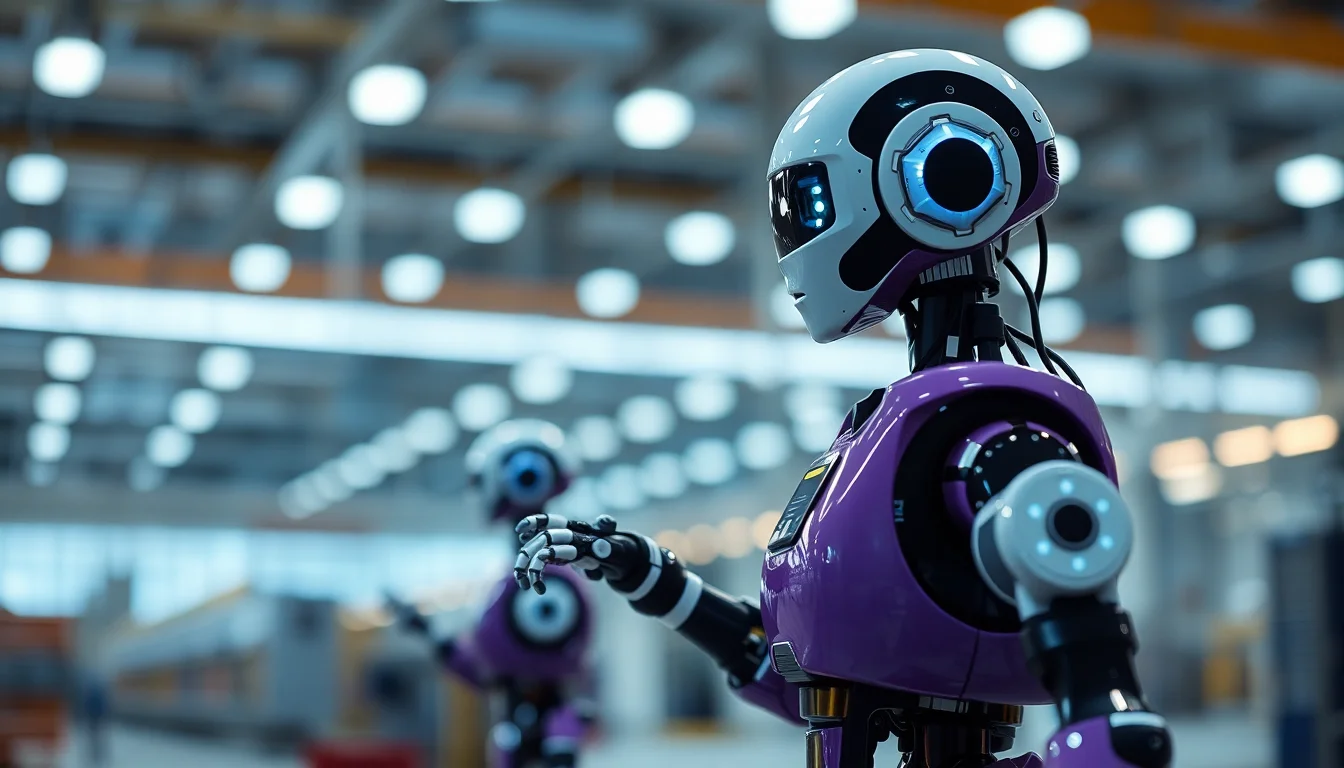
Mico is aimed at a different but related problem: how to bring adaptive automation into line layouts that are too tight or too variable for a single-purpose robot cell. A modular dual-arm system can potentially reduce the number of transfers between stations, support more complex manipulation, and fit into workflows where one arm alone would not be enough.
The key operational point is that Flexiv is signaling a shift from automation built around deterministic repetition toward automation built around interaction. That is important because many manufacturing tasks are only partially structured. They require a robot to find, feel, align, and correct in real time.
Deployment reality: the hard work starts after the demo
The presence of per-joint tactile sensing does not eliminate integration work. It changes the nature of it.
A successful deployment of Enlight or Mico still requires line redesign, not just a robot swap. Teams will need to decide where the robot fits in the process, how parts are presented, how variability is handled upstream, and which tasks are stable enough for a first release. A tactile robot can compensate for some variation, but it cannot make a badly designed cell behave like a well-structured one.
That means integration discipline becomes the main determinant of outcome. Engineers will need to align the robot with the broader autonomy stack: vision systems, part localization, motion control, force thresholds, exception handling, and factory software that can track states without creating opaque failure modes. Calibration routines matter more, not less, when the system is expected to react to touch. Safety also becomes more layered, because adaptive motion and human-adjacent work require clear limits, predictable stop conditions, and HMI designs that operators can actually understand under production pressure.
In other words, the launch may widen the set of automatable tasks, but it does not lower the bar for industrial readiness. If anything, it raises expectations for process engineering.
Operator impact: roles shift from programming to supervision and tuning
The most immediate workforce effect of tactile robotics is not job elimination so much as task reshaping.
Traditional industrial robot work often centers on teaching paths, setting fixed parameters, and keeping a stable cycle running. Systems like Enlight and Mico move operators and technicians closer to force-control tuning, exception handling, and continuous improvement. That shift can be productive, but only if the site has enough training and spare engineering capacity to absorb it.
Expect more attention to how tactile cues are interpreted in the control stack, how embodied AI behaviors are validated, and how operators are notified when a task deviates from normal range. A system that can “feel” is only useful if humans can tell what it felt, why it reacted, and whether the reaction is safe and repeatable.
That makes onboarding a commercial issue, not just a training issue. If the interface is confusing, or if technicians cannot diagnose why a robot adjusted its motion, the value of adaptive sensing drops quickly. The companies that get the most out of these platforms will likely be the ones that invest in playbooks, not just hardware.
Commercial viability: ROI will be local, not abstract
The business case for adaptive robots is real, but it will not be uniform.
Modularity and advanced sensing can reduce integration time in some environments and expand the number of tasks a single cell can cover. That is valuable in plants where labor is scarce, SKU variety is high, or the cost of manual inconsistency is rising. But these benefits will be offset if the site needs extensive line changes, specialized maintenance, or a broad ecosystem of custom software to keep the robot productive.
That means investors should be careful about generic automation narratives. The right question is not whether physical AI is promising in the abstract. It is whether a specific task set can deliver a measurable return after accounting for installation, tuning, safety validation, operator training, and ongoing support.
For operators, the most honest ROI framing is line-specific. A pilot may make sense if it targets a task where tactile sensing addresses a known failure mode, such as placement variability, contact-sensitive assembly, or handling that benefits from force feedback. A pilot is weaker if it simply replaces a stable process that already performs well with simpler hardware.
A practical pilot framework for teams evaluating Enlight or Mico
A credible pilot should start small and be designed around one clear operational constraint.
- Pick a task with meaningful variability. The best starting point is a process where force feedback or whole-body touch should reduce errors, not just a simple repetitive pick.
- Define success metrics before installation. Track throughput, first-pass quality, exception rate, uptime, and how often an operator must intervene. If the system cannot improve these metrics, the deployment is not ready to scale.
- Map the integration stack. Confirm how vision, motion control, tactile sensing, safety systems, and factory software will communicate. Problems here usually show up later as downtime or opaque faults.
- Build in operator workflows from day one. Decide who monitors the cell, who clears exceptions, and how changes are approved. A robot that requires constant ad hoc intervention is not yet a production asset.
- Test maintenance and calibration burden early. The more adaptive the robot, the more important it is to understand sensor drift, recalibration intervals, and spare-parts strategy.
- Only then evaluate scale. Expansion should follow repeatability, not enthusiasm.
That sequence matters because the central question is not whether Enlight and Mico are technically interesting. They are. The question is whether their tactile and embodied-AI capabilities can survive the constraints of real production without demanding so much custom integration that the advantage disappears.
Flexiv’s launch suggests the next phase of industrial robotics will be less about robots that do one motion perfectly and more about robots that can work with the uncertainty factories actually live with. The opportunity is real. So are the integration costs. The winners will be the teams that treat adaptive robotics as a systems project, not a hardware purchase.