ABB Robotics and Psyonic are trying to answer a very practical question in physical AI: can real-world manipulation data, captured from a prosthetic hand, make a cobot better at the kind of delicate, variable work that still frustrates automation teams?
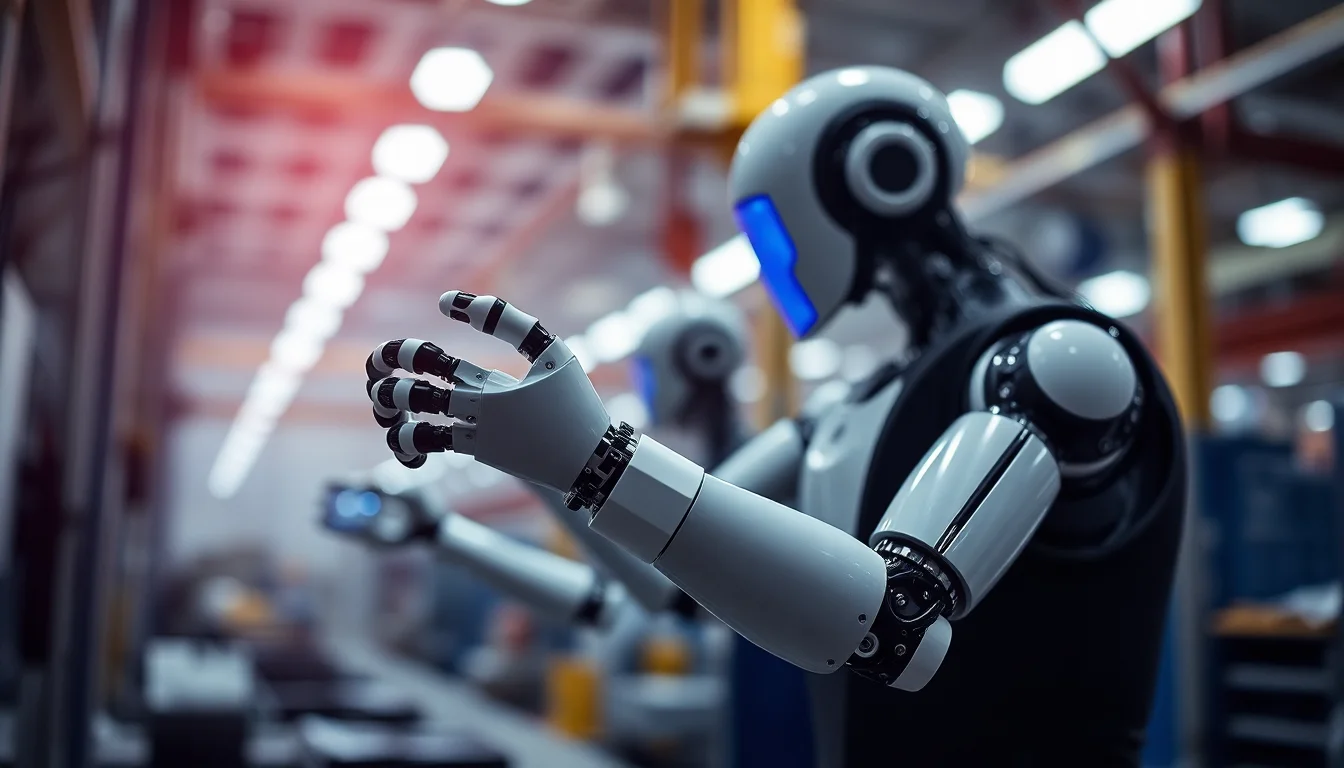
Their collaboration pairs Psyonic’s Ability Hand with ABB’s GoFa cobot to study how touch and motion data from human prosthetic use can be used to train robot gripping and handling. That matters because dexterity is still one of the hardest problems in industrial robotics, especially when a task is not just repetitive but variable, fragile, or highly sensitive to object shape and placement. ABB’s pitch is that better handling could reduce engineering time by as much as 30%, a number that is meaningful only if the robot can keep that performance once it leaves the demo cell.
The logic is straightforward. Traditional automation is strong when the part is fixed, the motion is predictable, and the tolerances are forgiving. It gets expensive when products vary, materials are soft or irregular, or the robot has to “feel” its way through a process. If human-generated manipulation data can teach GoFa to better infer grip force, approach angle, and adjustment during contact, the machine may be able to take on tasks that currently need more fixture design, more trial-and-error tuning, or more human intervention.
For operators, that is where the value sits: not in the idea of a more human-like robot, but in whether the system can expand the set of jobs a cobot can actually cover without constant reprogramming. If the handoff from data to behavior works, the upside is broader task coverage, fewer engineering hours per application, and potentially faster line changeovers. But the deployment bar is high. A useful dexterity upgrade has to survive the realities of production variation, not just a controlled proof of concept.
That creates the core operational test for this kind of physical AI program. The data may be rich, but it still has to be transferred into robot behavior in a way that is stable, calibratable, and maintainable on site. In practice, that means integrators will want to know how much data is needed, how often models need to be updated, what sensors or tooling are required, and how the system behaves when parts, lighting, speeds, or upstream processes change. If those questions are not answered cleanly, dexterity can become another pilot project that looks promising in a lab and costly in a plant.
Operator impact is equally important. Better handling should not come at the cost of more complex workflows for technicians or line workers. If a cobot needs frequent tuning, specialized debugging, or a separate support stack to keep delicate handling reliable, the labor burden can offset the gains. The most deployable version of this technology will be the one that reduces exception handling rather than shifting it from the robot to the operator.
Investors should read the ABB-Psyonic collaboration as a signal of where physical AI is moving, but not as a finished business case. The immediate question is less about whether dexterity can improve in principle and more about whether that improvement can be measured in uptime, cycle consistency, reduced changeover effort, and lower engineering cost per deployed cell. Those are the metrics that determine whether a dexterity program scales beyond a showcase installation.
Expect the commercial path to be staged. Early deployments will likely need clear performance thresholds, maintenance assumptions, and support commitments before they can justify broader rollouts. The economics will depend on how much labor the cobot can displace or reallocate, how often the system needs intervention, and whether the same data-driven approach works across multiple applications or only a narrow set of handling tasks.
That is why this collaboration matters. It is not just another robotics partnership attached to the physical AI label. It is a test of whether human-derived manipulation data can produce a cobot that is more capable in the messy, high-variance conditions that define real factories. If the answer is yes, the payoff could be meaningful. If the answer is only partial, the market will still be left with the hardest part of automation: turning an interesting technical result into dependable production economics.