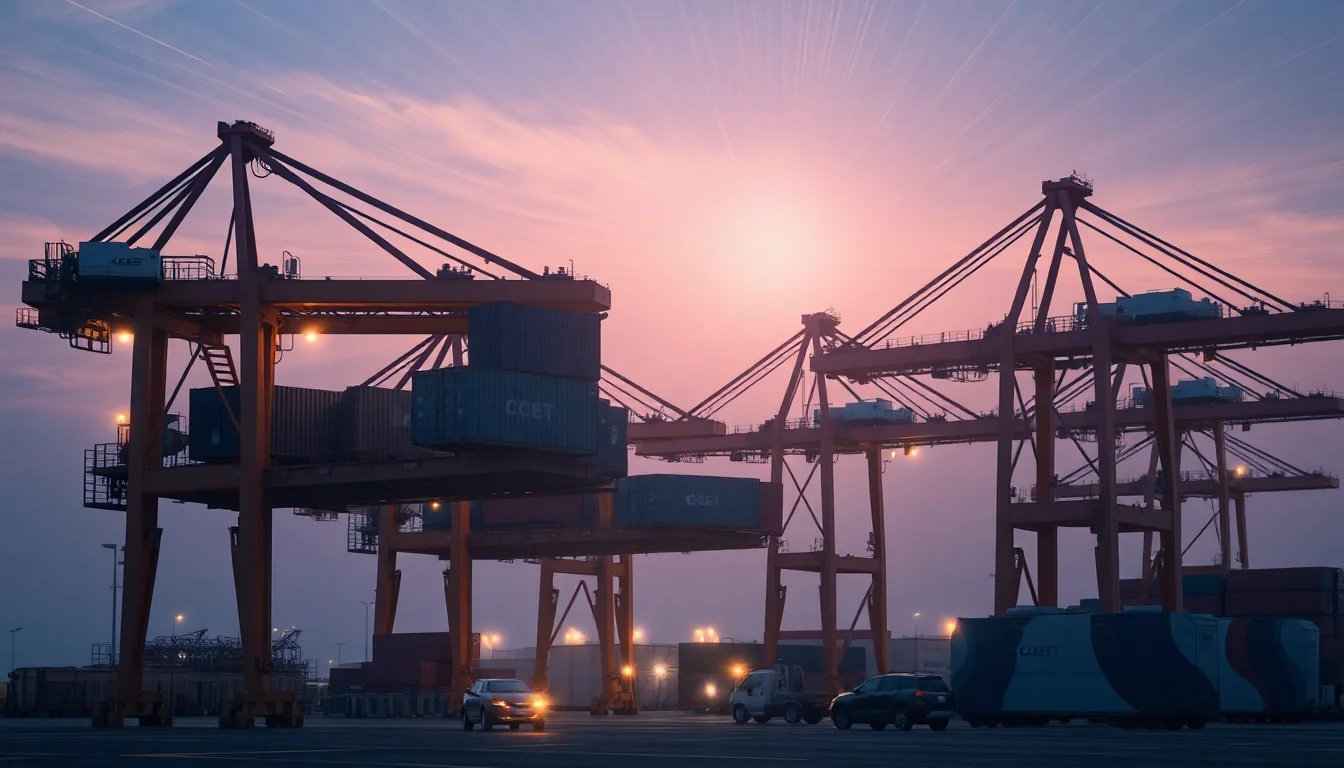
Robot.com is trying to do something the out-of-home industry has talked about for years and rarely executed cleanly: turn robots into a media channel that can be measured like software.
With the launch of R-ads, the company is bundling moving robots, vehicle wraps, and digital screens into a single advertising platform spanning RDOOH, MOOH, and DOOH. The pitch is straightforward. If a robot can navigate a venue, interact with people, and capture attention on the move, then the impression should not be treated as a loose estimate. It should be tracked, attributed, and reported in real time.
That is the core claim behind R-ads’ AI-powered impression tracking, and it is also the point where the concept runs into the realities of deployment.
Robot.com says the platform follows more than 100 brand activations across 20-plus countries, including sports properties, global tech conferences, CPG launches, and a major sporting event. It also says more than 500 robots are now deployed across campuses, warehouses, and city streets, with 2.5 million tasks completed to date. Those are not trivial numbers for a field still working out how to commercialize physical AI beyond demos and pilots.
“Billboards build reach. Robots build interaction. Put them on the same platform, and every impression becomes a result a brand can measure,” co-founder and president of robotic media Judah Longgrear said in announcing the product.
That framing matters because it reveals what R-ads is really selling: not just screen space on robots, but a measurement layer over physical movement. In conventional DOOH, media buyers often settle for proxy metrics, estimated footfall, or venue-level reporting. R-ads is aiming to push that model closer to digital adtech norms, where the system can continuously score exposure and connect it to a live campaign workflow.
What changes when robots become ad inventory
In practice, the launch matters because it collapses several previously separate categories into one operating stack.
A moving robot becomes RDOOH inventory. A branded vehicle wrapper becomes MOOH inventory. A fixed screen becomes DOOH inventory. Under R-ads, those formats are not sold as isolated placements but as a unified, data-instrumented channel that can be managed across sites and campaigns.
That is attractive for brands that want reach and novelty in the same package. It is also attractive for robot operators, because it opens a new revenue stream tied to assets they already run through autonomy stacks, fleet management systems, and service schedules.
But the same integration is also where the operating burden starts.
A robot that is carrying a campaign payload cannot be treated like a generic autonomous device. Its route plan, uptime requirements, battery cycle, lighting conditions, and interaction zones all affect whether an impression is actually delivered. If the measurement system says a robot should have generated exposure but the unit was delayed, obstructed, or taken offline for maintenance, the media product becomes less predictable.
That is why the promise of real-time, AI-powered impression tracking is only as useful as the fleet data behind it. If the platform cannot reliably ingest telemetry, reconcile location with audience context, and timestamp delivery events with enough precision, then “measurable” becomes an aspirational label rather than a dependable commercial metric.
The field reality: fleets, workflows, and latency
For operators, the most important question is not whether the idea is clever. It is whether the system can be run without creating an operational tax that eats the margin.
Robot.com’s deployment base gives a hint at the scale of the challenge. More than 500 robots across campuses, warehouses, and city streets implies a spread of environments, each with different movement rules, safety requirements, and audience dynamics. A warehouse robot is not a city-street robot. A campus deployment is not a conference activation. A sports venue campaign is not a consumer sampling run in public space.
That matters because R-ads depends on disciplined field operations to make ad delivery consistent.
Operators will need to manage:
- fleet-level orchestration so branded units are where they are supposed to be;
- maintenance windows that do not interrupt paid campaigns;
- data pipelines that can surface live impression estimates without lag;
- asset-level configuration so each robot, vehicle wrap, or screen is matched to the correct campaign;
- and brand-safety rules that prevent a campaign from appearing in the wrong place, at the wrong time, or under the wrong conditions.
The more autonomous the fleet, the more important the coordination layer becomes. A media network is only valuable if the system can keep delivery, telemetry, and billing aligned. In robotics, that means the ad platform has to sit cleanly on top of autonomy stacks rather than fighting them.
That is where the deployment lens becomes essential. Real-time reporting is useful only if the operational systems underneath it are stable enough to support it. If position data arrives late, if a robot is rerouted for safety, or if a venue’s connectivity degrades, impression counts and campaign reporting can become noisy quickly.
What this means for operators
For robot operators, R-ads changes the job description.
Instead of simply keeping a fleet online, teams now have to think like media operators as well. The maintenance calendar becomes part of the revenue plan. A battery swap is not just an uptime event; it is a potential impression loss. A route adjustment is not just a navigation decision; it can alter campaign delivery. A software update is not just a robot release; it may affect ad rendering, reporting, or audience detection.
That creates new advantages. Operators gain visibility into how much value their fleet can generate beyond its core service function. Impression-tracking dashboards can help teams decide which sites, hours, and formats are actually worth running. Live data can inform where to deploy units for better density, better dwell time, or better interaction rates.
It also creates new obligations.
Brand safety now extends into the physical environment. A campaign cannot simply be served into a feed; it has to be executed in public or semi-public space, under local rules, with all the usual constraints around safety, privacy, signage, and venue approvals. Cross-border activations add another layer of complexity because the acceptable use of cameras, sensors, analytics, and advertising content may differ materially from country to country.
For fleet managers and compliance teams, the question is whether those controls are mature enough to scale beyond bespoke activations.
ROI looks plausible, but not automatic
R-ads has enough early activity behind it to suggest commercial interest is real. More than 100 brand activations across 20-plus countries is a meaningful proof point, especially when those activations span categories that already spend on reach, sampling, and event-based engagement.
The presence of 2.5 million completed tasks also signals that the company is not starting from zero; it is layering media monetization onto an operating base that already exists.
Still, those numbers do not settle the ROI question.
For brands, the value case will depend on whether robotic inventory produces outcomes that justify the premium over more familiar channels. In some settings, the novelty and interaction may be enough. In others, a marketer will want clean attribution, repeatable audience estimates, and clear evidence that the robot did more than attract curiosity.
For operators, the economics will depend on whether the added media layer improves fleet utilization without introducing too much friction.
That means pricing is likely to remain situational for now. A high-profile launch, a sports activation, or a conference floor deployment can support a different economics profile than a routine deployment in a controlled environment. The business may look strongest where robots are already present, public visibility matters, and the audience is valuable enough to justify the measurement and compliance burden.
What is less clear is how quickly those conditions can be standardized across broader fleets and venue types.
Why the architecture matters
R-ads is most credible when viewed as a platform problem rather than a campaign stunt.
A unified architecture spanning RDOOH, MOOH, and DOOH only works if the data model is consistent across moving robots, vehicle wraps, and digital screens. That requires common identity, common reporting logic, and enough integration with autonomy stacks to ensure that physical execution and ad reporting are synchronized.
The real-time AI impression layer is the differentiator here. Without it, the system is just another way to rent attention in the physical world. With it, Robot.com is trying to create a more accountable version of mobile media, one where campaign performance is tied to observed movement and field conditions rather than broad estimates.
But the same architecture also increases the importance of governance.
If the company expands fleet size and venue coverage, it will have to prove that reporting remains trustworthy as environments get more complex. It will need data quality controls, privacy-conscious analytics, and operational rules that hold up under different local regulations. It will also need to show that the platform can scale without creating a gap between what the dashboard reports and what the field actually delivered.
That is the real test.
The launch of R-ads makes a strong case that robots can be more than service machines. They can be moving media inventory, sampled activations, and measurable touchpoints in the same workflow. But the business only works if operators can run the fleet with enough discipline to make every impression auditable.
In other words, the opportunity is real, but so is the operational load. The companies most likely to benefit will be the ones already thinking in terms of autonomy stacks, venue access, reporting integrity, and fleet reliability — not just ad creative.
For investors, that means the signal is promising but still early. For operators, it means the media upside comes with a new category of system design work. And for brands, it means the next question is not whether robots can deliver attention. It is whether that attention can be measured cleanly enough to justify paying for it at scale.