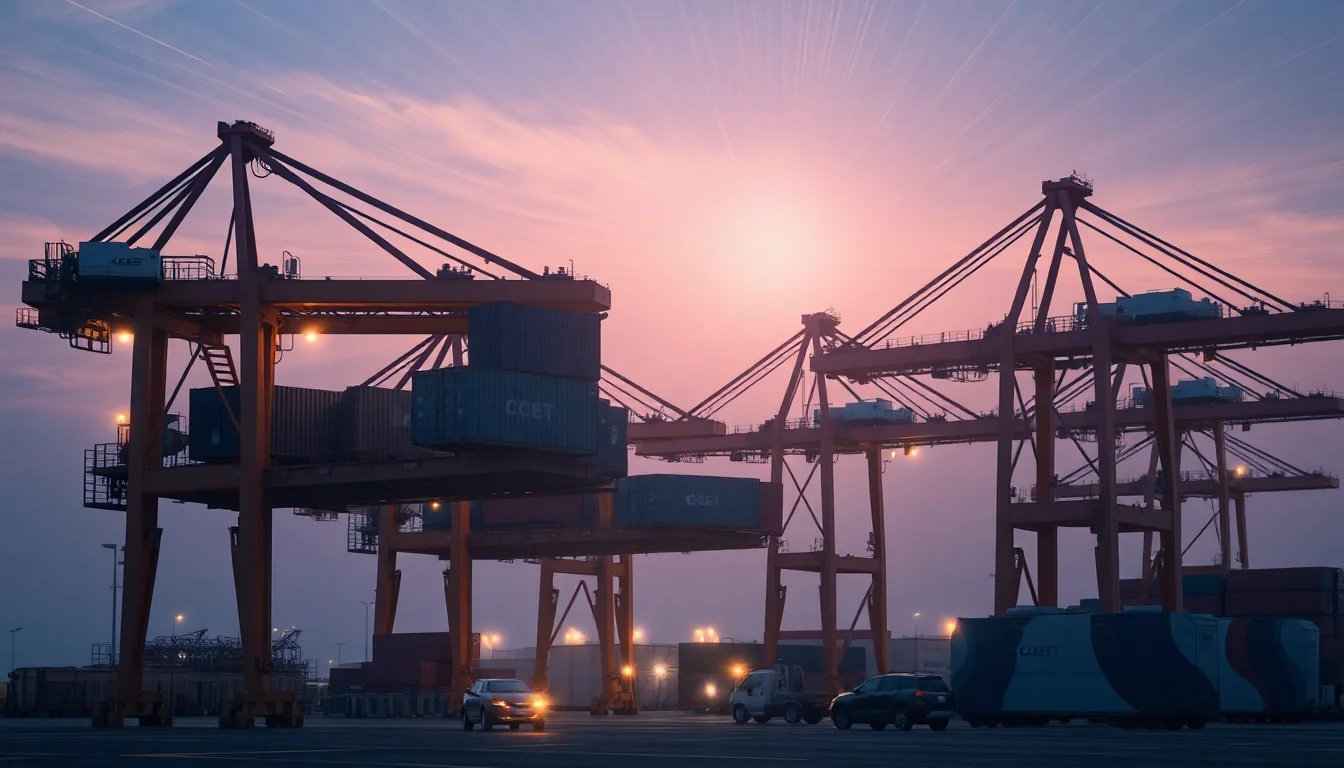
Automated Container Gantry Cranes Are Moving From Pilot to Port Standard in 2026
2026 looks like the year automated container gantry cranes stop being treated as showcase projects and start acting like core port infrastructure. The shift is not happening because ports suddenly trust autonomy in the abstract. It is happening because the combination of sensor fusion, centralized remote supervision, and better software integration is producing repeatable operational gains on the dock.
The headline numbers are notable: reported deployments are delivering about 20% faster cycle times and 25–35% higher throughput. That is enough to get the attention of operators trying to move more boxes through constrained waterfront real estate, and investors looking for automation projects with a clearer path to utilization gains. But the deployment reality matters just as much as the performance figures. In ports, the difference between a successful automation program and an expensive retrofit is usually buried in integration quality, maintenance cadence, and how well the workforce adapts to a new operating model.
How the technology actually delivers
Automated gantry cranes are not running on a single breakthrough. They are running on a stack: laser positioning, machine vision, and other sensors fused into a control system that can place and move containers with far greater consistency than a purely manual workflow. The machine is not simply “driving itself.” It is continuously reconciling what it sees, where the container should be, and what the control system expects next.
That matters because ports are messy environments. Containers are stacked under changing light conditions, weather varies, equipment moves in parallel, and downstream systems need to stay synchronized. Sensor fusion gives the crane enough situational awareness to make precise moves at scale, while remote supervision from centralized control centers allows human operators to monitor multiple machines and step in when an exception requires judgment.
This is the practical model now emerging: not full autonomy in the vacuum of a lab, but supervised automation in a live terminal. Centralized oversight can improve consistency, reduce idle time, and let operators manage larger crane fleets without putting a person in every cab. The strongest deployments are the ones that treat autonomy as an operations layer, not a replacement for operational discipline.
What changes on the dock
The job changes as much as the machine does. Traditional crane operators become monitors, interveners, and exception handlers. Engineers spend more time on diagnostics, telemetry, and data analysis. Maintenance teams move from purely reactive fixes to condition-based workflows supported by IoT signals and failure warnings.
That shift has real benefits. Predictive maintenance can flag wear in critical components before a fault becomes downtime, which is especially valuable in high-throughput terminals where even short interruptions cascade into berth delays and yard congestion. But it also creates new work. Ports need staff who can read sensor data, understand control-system behavior, and troubleshoot integration issues across the crane, the terminal operating system, and broader port IT.
Training is not a side issue here. It is part of the deployment model. If a terminal automates equipment faster than it upgrades its operating practices, the result can be more complexity, not less. In successful sites, the human role does not disappear; it becomes more analytical and more focused on oversight, reliability, and exception management.
The performance story is real, but conditional
The strongest commercial case for automated gantry cranes comes from the combination of throughput and consistency. In the field, reported gains of roughly 20% faster cycle times and 25–35% higher throughput are meaningful. For a port operating near capacity, those are not incremental tweaks; they can change berth utilization, scheduling flexibility, and how much container volume a terminal can absorb without expanding physical footprint.
Still, the return on investment is not automatic. The numbers depend on the quality of the integration with port management systems, the reliability of the sensing and control stack, and the maintenance program behind the equipment. Centralized-control overhead also matters. A remote supervision center can reduce on-dock labor requirements and improve oversight, but it introduces its own staffing, software, and operational costs.
That is why capex and opex should be evaluated together. Automated cranes typically carry higher upfront costs than conventional systems, but the case is only compelling if a port can sustain utilization, maintain reliability, and absorb the systems work required to keep the equipment coordinated with yard operations, gate traffic, and vessel scheduling. The right question is not whether the crane can automate a lift. It is whether the terminal can reliably automate the workflow around the lift.
Commercial scaling depends on integration, not slogans
For operators and investors, the commercial risk sits less in the crane mechanics than in the surrounding stack. Integration with existing terminal operating systems, legacy port IT, energy management, and fleet supervision tools can determine whether a deployment scales across berths or stalls after the first installation.
That is also where vendor selection becomes strategic. The best procurement process will not just compare crane specs. It will test how well a vendor handles interfaces, remote diagnostics, and support for multiple terminals. If a port plans to centralize supervision across sites, the software architecture and network resilience become just as important as mechanical uptime.
Energy usage is another practical variable. Ports are under pressure to improve efficiency and lower emissions, which makes electrified automation attractive, but energy costs and power infrastructure still affect total cost of ownership. A system that performs well in a pilot zone may look very different once it is scaled to multiple cranes, multiple shifts, and a wider operating footprint.
What to watch next
The near-term direction is clear enough: more sensors, tighter predictive maintenance, and better supervised autonomy. The next wave of gains will likely come less from dramatic new hardware and more from improving the reliability of the control stack, the quality of maintenance data, and the way ports train personnel to work with automation.
For operators, that means focusing on deployment reality: integration testing, downtime planning, software support, and workforce transition. For investors, it means being skeptical of simple ROI claims and asking how much of the promised throughput gain depends on conditions that can actually be replicated across terminals.
Automated container gantry cranes are no longer a speculative idea. They are becoming part of how modern ports operate. The technology is good enough to matter, but the economics still depend on execution. In 2026, that is the real story: not whether automation works in principle, but whether ports can make it work reliably, repeatedly, and at scale.