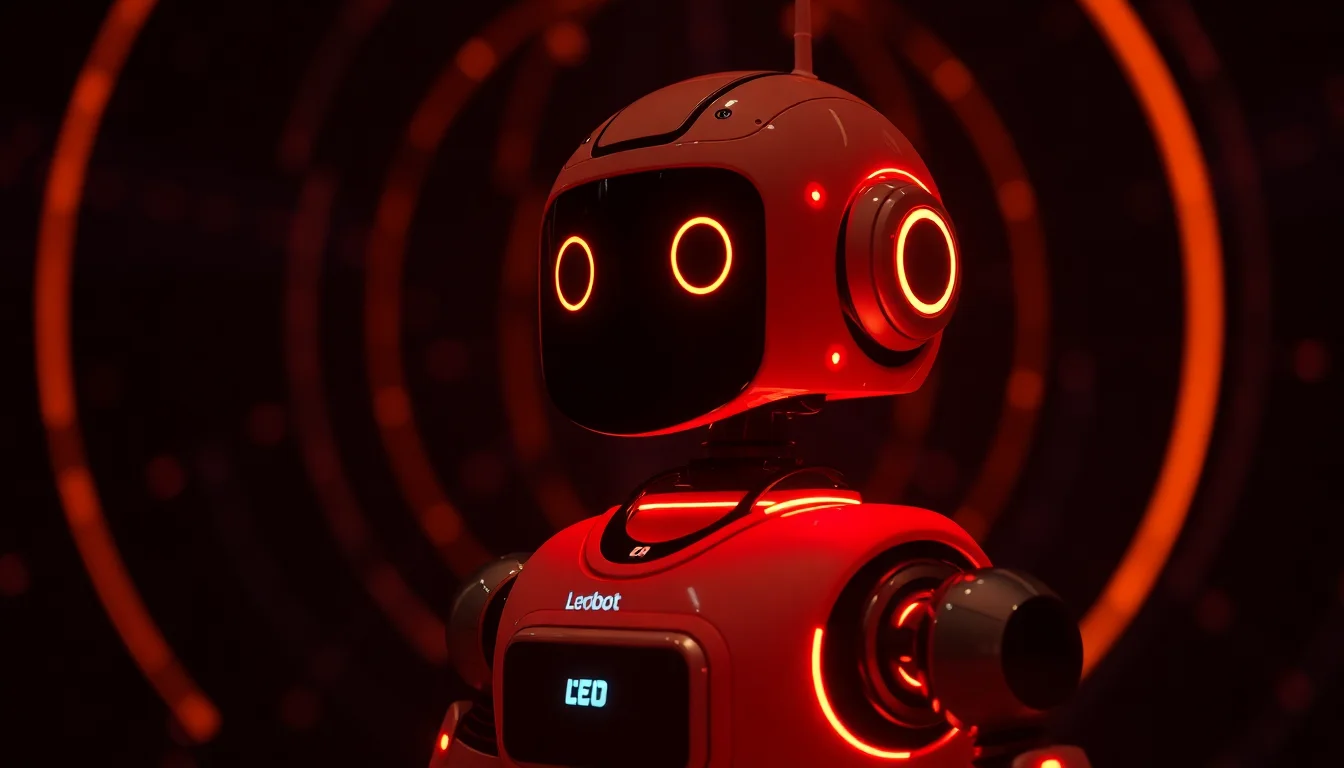
GENISOM AI’s appearance at ICRA 2026 was less about spectacle than positioning. The message the company brought to the field robotics crowd was straightforward: embodied AI is no longer just a lab exercise, and the next battleground is deployment reality.
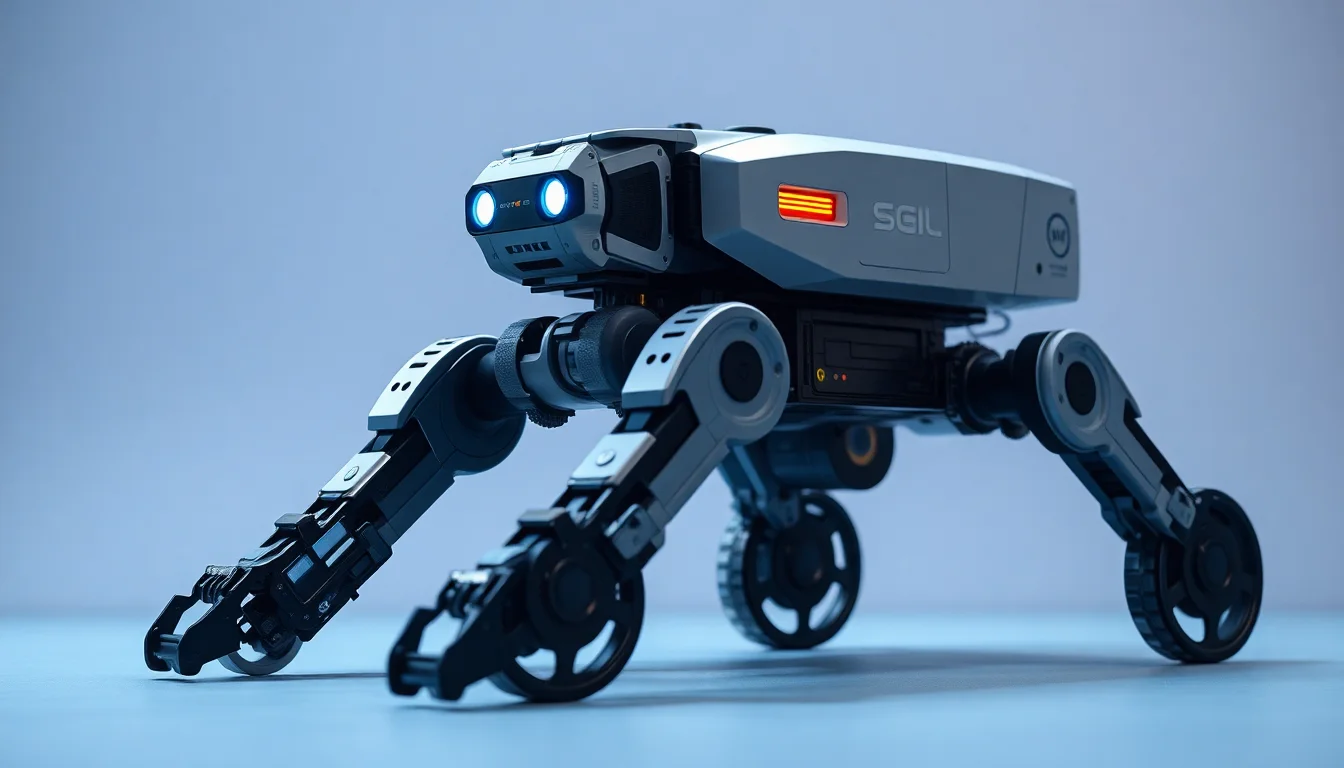
That matters because the market has seen plenty of impressive autonomy demos that fade when they meet dust, weather, shift changes, service intervals, and the day-to-day friction of industrial work. GENISOM tried to answer that criticism by framing its offering as a full-stack embodied intelligence system that runs from simulation through navigation, motion control, and live deployment. The centerpiece of the pitch was the GENISOM M1, a quadruped rated for a 30 kg payload and protected to IP67 for industrial and field use.
For operators, that combination is the real signal. A robot that can move in a controlled demo environment is not the same as a robot that can be maintained, trained, serviced, and kept online in an actual site. GENISOM’s ICRA debut suggests it understands that distinction, and is trying to sell the stack rather than a single machine.
Deployment reality arrives: field viability is now the question
ICRA is where robotics companies often show their best version of themselves. What stood out in GENISOM’s case is that the company chose to emphasize end-to-end embodied intelligence from simulation to deployment, rather than isolated autonomy functions.
That framing is important. In industrial robotics, value usually emerges when perception, planning, motion, and control are not treated as separate products but as one operating system for the machine. GENISOM says its system connects core robotic components, robot platforms, simulation, navigation, motion control, agentic intelligence, scalable manufacturing, and real-world deployment. In other words, it is trying to position itself as a deployment platform, not just a robot maker.
The M1 is the clearest expression of that ambition. With a 30 kg payload and IP67 protection, it is being presented as a rugged quadruped for environments where durability is not optional. That does not automatically make it ready for every industrial task, but it does put the conversation where buyers actually live: can this survive the site, the weather, the maintenance schedule, and the operator handoff?
What ‘end-to-end’ means once the robot leaves the demo floor
The phrase “end-to-end” gets used loosely in robotics, but in the field it has a specific meaning. Simulation must map cleanly to real-world performance. Navigation must handle clutter, changing terrain, and incomplete data. Motion control has to remain stable under load. Sensor fusion needs to work without requiring constant manual intervention. And all of that has to be supportable by the customer’s technicians or by the vendor’s service team.
GENISOM’s live demonstrations in controlled environments helped show the stack’s claimed capabilities, but controlled environments are not deployment. They reduce variability, which is useful for proving out integration. The harder question is what happens when the robot is dropped into a site where lighting changes, surfaces get wet, schedules are tight, and the maintenance window is short.
That is where end-to-end architecture either pays off or becomes a source of integration risk. A vertically integrated stack can reduce handoff failures between software layers, but it also concentrates responsibility. If something breaks, operators need a clear service path. If a model drifts, they need a retraining workflow. If a sensor fails, they need a replacement process that does not take the asset offline for too long.
Operator impact: uptime, training, and safety will decide adoption
The appeal of a rugged quadruped is obvious to industrial buyers. IP67 protection signals a machine designed to tolerate harsh conditions, and a 30 kg payload opens up practical use cases that lighter robots cannot handle. But operators do not buy ruggedization alone. They buy uptime.
That shifts the conversation from capability to operations. How often does the robot need inspection? What are the maintenance rituals? Can the system be serviced by local teams, or does it require specialist intervention? How much training does an operator need before the robot can be trusted around people and equipment? These are not side questions; they are the core of deployment.
Safety is equally central. A quadruped working around industrial infrastructure has to be predictable in motion and transparent in control. Even when autonomy is doing the heavy lifting, an operations team still needs procedural guardrails, emergency stop logic, and a clear understanding of how the robot behaves in edge cases. Integrated perception and control can reduce human burden, but only if the operator workflows are designed around that reality.
The practical takeaway for buyers is that the robot is only part of the system. Training, inspection cadence, spare parts, remote diagnostics, and field service readiness all shape whether the platform becomes a productive tool or an expensive pilot.
Commercial viability: the demo has to survive the spreadsheet
GENISOM’s broader pitch is that a full-stack embodied intelligence system can support scalable manufacturing and deployment. That is the right direction if the goal is commercial robotics, because industrial customers care less about novelty than about repeatability.
The ROI case, though, is unforgiving. A robot can be technically impressive and still fail commercially if uptime is inconsistent, service costs are unpredictable, or the deployment process is too complex. For investors, the question is whether GENISOM can turn integrated robotics into a durable business model rather than a one-off showcase.
For operators, the math is equally concrete. A robot earns its keep when it reduces labor bottlenecks, improves inspection or transport workflows, and stays online long enough to justify the capital expense. That depends on support quality, maintainability, and how quickly the platform can be integrated into existing operations.
This is why GENISOM’s ICRA debut is notable but not conclusive. The company appears to be making the right argument for this phase of the market: physical AI is moving toward actual deployment, and the winning systems will be the ones that can be serviced, trained, and scaled in the field.
What remains to be proven is whether the M1 and the broader stack can keep delivering once the demo environment disappears. In physical AI, that is where the real differentiation begins.