NVIDIA and Doosan Group are moving physical AI out of the presentation layer and into infrastructure planning.
The two companies said they will expand their collaboration across Doosan Robotics, Doosan Bobcat, Doosan Enerbility, and Doosan Corporation Electro-Materials, tying together robotics, industrial automation, power systems, and advanced electronics materials around NVIDIA’s DSX AI factory platform, MGX, and accelerated computing stack. That matters because the bottleneck in physical AI is no longer the idea of intelligent machines. It is deployment reality: how to power them, connect them, update them, and keep them useful on a factory floor that still has to ship product every shift.
For operators and investors, the significance is not the headline alone. It is the shape of the stack. NVIDIA and Doosan are framing this as an AI factory approach, which implies a buildout that reaches beyond standalone robots or isolated pilots. DSX is meant to organize the AI factory workflow, while MGX and accelerated computing provide the compute foundation for production systems that have to move data across edge, cloud, and factory environments without constant manual intervention.
That architecture gives the partnership a broader industrial logic. Doosan’s portfolio spans multiple points in the physical economy: robot systems, construction equipment, power generation, and materials for data center hardware. In theory, that lets the companies standardize parts of the physical AI pipeline across businesses that have different uptime requirements but similar needs around perception, control, maintenance, and operational monitoring. In practice, it also means the hard work will be integration work.
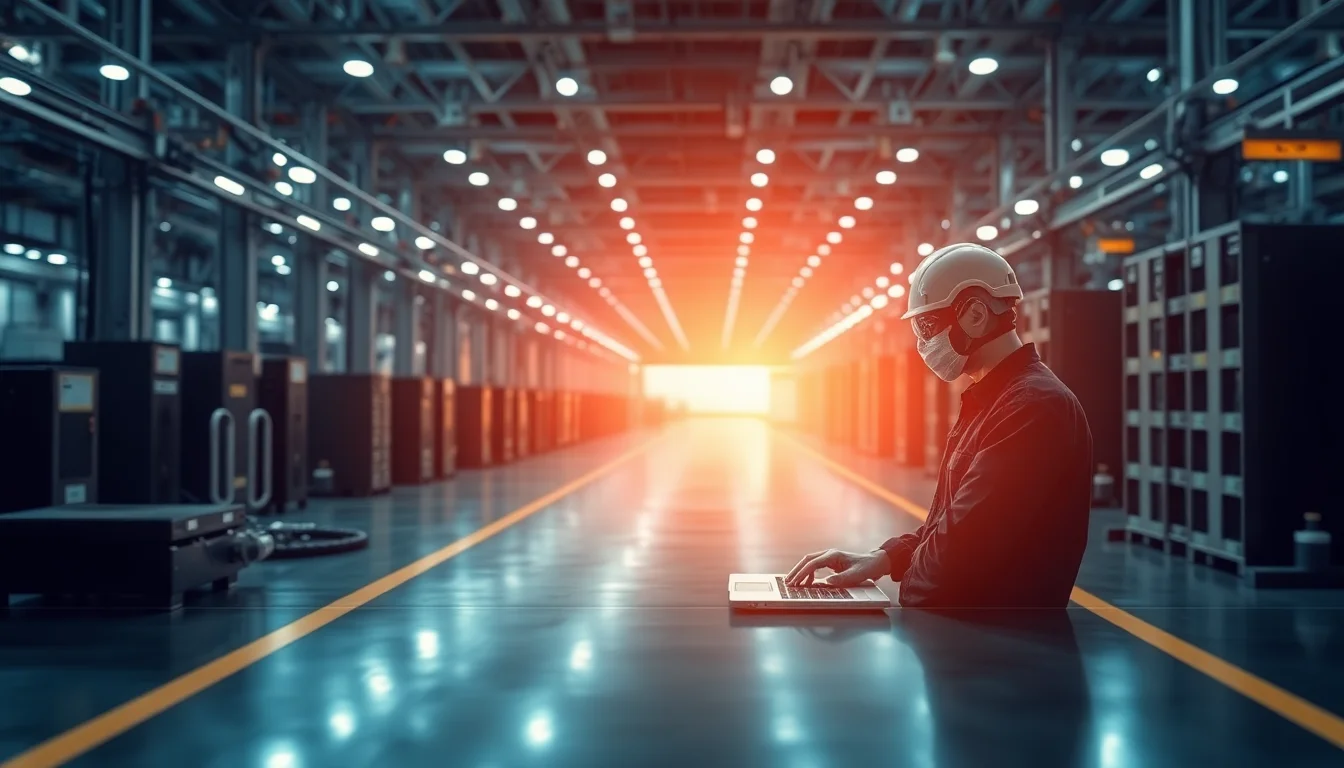
What changes on the shop floor
The near-term promise is not a fully autonomous plant. It is a more disciplined path to deploying AI-enabled machines and infrastructure in settings where failures are expensive and interfaces have to be clear.
Using NVIDIA’s DSX AI factory platform, along with MGX and accelerated computing, Doosan can assemble a common infrastructure layer for tasks such as robotic perception, fleet management, predictive maintenance, and industrial workflow optimization. But those benefits only show up if the edge devices, factory networks, control systems, and data pipelines are engineered to work as one system. Physical AI lives or dies on data fidelity: if sensor inputs are inconsistent, poorly labeled, or slow to move, the model may look good in a lab and underperform in production.
That is why the deployment reality here matters more than the branding. An AI factory stack has to tolerate the messy parts of industrial operations: intermittent connectivity, legacy equipment, thermal constraints, power limits, and the need to keep existing automation running while new systems come online. The value comes from reducing friction between those layers, not from adding another dashboard.
Performance will depend on orchestration, not just compute
Investors will want to watch for evidence that the collaboration is producing repeatable operating patterns rather than one-off technical wins. In this type of deployment, raw model performance is only one input. End-to-end orchestration, software update discipline, and maintenance design matter just as much.
If the stack scales, it will likely do so through predictable upgrade paths and centralized management that reduce the burden on local teams. If it does not, gains from better perception or faster inference can be offset by support complexity, patching overhead, or downtime caused by misaligned software and hardware refresh cycles.
Power and thermal management are another constraint that cannot be hand-waved away. Doosan Enerbility’s inclusion signals that the partnership is thinking about the supply side of AI infrastructure as well as the robotics side. That is a useful reminder that physical AI is not just about the machine at the edge; it is about the facility around it. More compute means more heat, more electrical planning, and more operational coordination between IT, facilities, and manufacturing teams.
What operators will actually see
Frontline teams should expect more touchpoints with higher-level automation interfaces, diagnostics, and remote support tools. That does not automatically mean fewer people in the loop. It means a different kind of human role: less routine machine babysitting, more exception handling, validation, and recovery when the system flags a fault or drifts from expected behavior.
For that to work, the user experience has to be simple enough for operators to trust under pressure. Clear fault isolation, actionable alerts, and a clean handoff between local controls and remote support will matter more than flashy model demos. Training will also need to shift. Operators and maintenance staff will need enough context to understand what the AI system is doing, what it is uncertain about, and when to override it.
That is especially important in a multi-business rollout. A robot line, a construction machine, a power system, and a materials workflow do not share identical risk tolerances or service processes. Standardization can reduce complexity, but only if Doosan can reconcile those differences without forcing every business unit into the same operational mold.
What commercial proof will look like
The partnership creates a scalable path for AI-enabled factories, but the commercial case will come from disciplined deployment, not from the existence of a platform. The key question is whether Doosan can move from pilots to broader rollout while keeping integration costs, support load, and downtime under control.
Investors should watch for a few signs of progress: whether Doosan standardizes common workflows across its portfolio, whether it can reuse infrastructure rather than rebuild it for each use case, and whether the AI factory approach produces measurable operational consistency. Operators should watch for the opposite signals: fragmented tooling, unclear ownership between engineering and manufacturing teams, and update processes that interrupt production instead of improving it.
The NVIDIA-Doosan collaboration is notable because it treats physical AI as an industrial system problem. That is a more credible starting point than treating it as a robotics demo. If DSX, MGX, and accelerated computing can be translated into robust, operator-friendly deployments across Doosan’s portfolio, the result could be less about headline-grabbing autonomy and more about a repeatable AI factory model that survives contact with the shop floor.