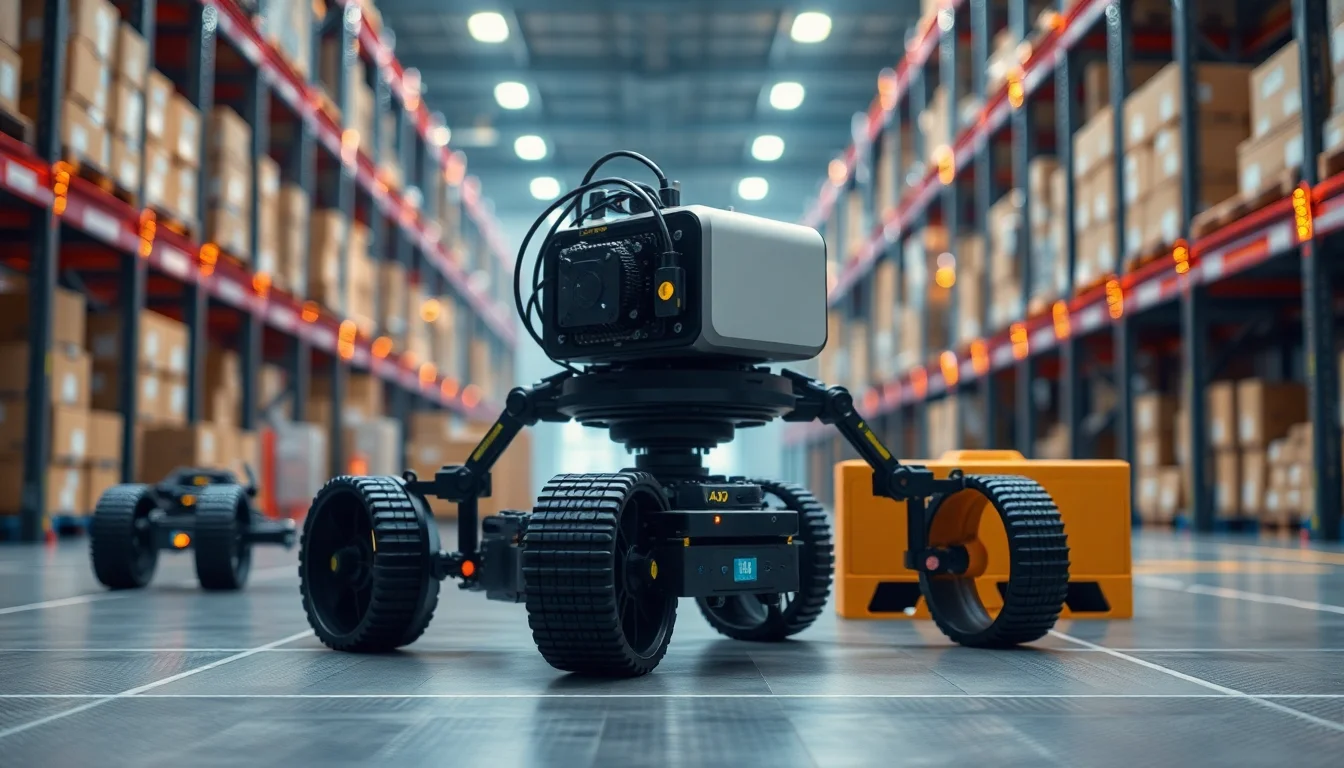
Locus Robotics has made a clear strategic bet: if autonomous fulfillment is going to move beyond narrow pick-and-place use cases, the stack has to get better at grasping messy, real-world inventory. Its acquisition of Nexera Robotics brings that bet into focus by embedding Nexera’s NeuraGrasp end-effector into the Locus Array platform and broadening the company’s autonomous mobile manipulation reach.
That matters because the next stage of warehouse robotics is not just about moving faster between aisle locations. It is about handling more of the handoff work that still forces exceptions, human intervention, or fixed-infrastructure workarounds. Locus says the integration expands end-to-end fulfillment capabilities, and the logic is straightforward: if a mobile robot can reliably identify, approach, and grasp a wider range of items, the system becomes more useful across more workflows. But the value of that capability will not be measured in the press release. It will be measured on the floor, against the disorder of live inventory and the pressure of daily throughput targets.
Locus and Nexera: a strategic bet on deeper autonomy
The acquisition gives Locus a more ambitious manipulation story. NeuraGrasp is positioned as an advanced end-effector that extends what Locus Array can handle, especially in SKU categories and manipulation tasks that have been harder for existing systems. That is a meaningful scope expansion, because warehouse automation tends to fail at the edges: odd packaging, mixed payloads, variable orientations, cluttered totes, and items that look easy in a demo but turn brittle in production.
For operators and investors, the strategic signal is that Locus is trying to own more of the autonomy stack, not just the mobility layer. In practice, that means the company is chasing a larger share of the workflow between robot arrival and completed fulfillment action. If successful, the result could be fewer handoffs and less dependence on fixed automation. If unsuccessful, the acquisition risks becoming another example of capability that looks broad on paper but narrows under operational load.
Deployment reality on the warehouse floor
This is where the promise runs into warehouse physics. Real facilities do not offer clean catalogs, stable object presentation, or perfectly repeatable workflows. They present inventory variability, payload diversity, changing labor patterns, and constant exceptions. A manipulation system that performs well in controlled conditions can still struggle when SKU mix shifts, cartons deform, items arrive with inconsistent orientation, or throughput spikes force the robot to operate under tighter time constraints.
That is why the most important question is not whether NeuraGrasp expands autonomous mobile manipulation in principle — it does — but whether that expanded capability survives contact with actual operations. In a live warehouse, broader grasping can create new bottlenecks if perception, motion planning, and control do not stay synchronized. A more capable end-effector is useful only if the rest of the stack can feed it clean enough data, recover quickly from failed grasps, and keep cycle times inside acceptable ranges.
There is also a systems question here. End-to-end fulfillment is rarely limited by a single component. It depends on orchestration across software, robot availability, exception handling, and integration with warehouse management processes. If the NeuraGrasp layer introduces more configuration complexity, it could delay deployment or increase tuning requirements, even while it expands the addressable task set. That is why deployment reality matters more than feature breadth.
Operator impact and lifecycle management
For operators, the acquisition likely shifts the emphasis from basic fleet management toward more active lifecycle management. More advanced manipulation systems typically require calibration routines, sensor and gripper monitoring, failure tracking, and routine checks that keep performance stable as conditions change. That does not mean more manual work everywhere, but it does mean a different kind of operational discipline.
The human factor is easy to underestimate. If the system depends on fine-grained settings, item-specific policies, or exception recovery procedures, then operator proficiency becomes a direct input into throughput and reliability. In other words, the technology may be autonomous, but the deployment is not self-managing. Teams will need dashboards that surface grasp success rates, fault modes, maintenance intervals, and other indicators that show whether the system is meeting production targets or quietly slipping.
Safety and maintenance will matter as much as grasping performance. A more capable manipulation system must still be predictable around workers, pallets, totes, and dynamic warehouse traffic. If the integration increases wear, raises inspection demands, or complicates recovery from faults, the operational burden can offset gains in autonomy. For engineering teams, the test is whether the new capability improves the system without making it more fragile.
Commercial viability and ROI in practice
The commercial case for this acquisition is attractive in theory: broader manipulation should raise the number of tasks a robot can complete, which could lift throughput and improve utilization. But warehouses buy on economics, not aspiration. Total cost of ownership, integration risk, service burden, and the time required to validate performance in the customer’s own environment will shape the real payback period.
That means ROI will likely be uneven at first. Customers with standardized SKUs, cleaner inventory presentation, and strong process discipline may see benefits sooner. Facilities with high SKU entropy, frequent packaging variation, or tight labor coordination may need more tuning before the economics become compelling. For those buyers, the question is not whether autonomous mobile manipulation is interesting. It is whether the new capability is reliable enough to justify deployment at scale.
Investors should watch for evidence that the acquisition translates into repeatable unit economics, not just a larger product story. If NeuraGrasp expands the task envelope while preserving uptime and keeping service complexity under control, the platform becomes more valuable. If it requires heavy customization or generates high exception rates, the commercial upside gets harder to defend.
Roadmap and milestones: what to watch next
The next 12 to 24 months should reveal whether this acquisition is a meaningful operational inflection or simply a capability extension that needs more time in the field. The clearest milestones will be concrete rather than rhetorical.
Look for live-warehouse trials that report grasp success rates across mixed SKUs, not just curated demonstrations. Watch for software updates that reduce exception handling and improve recovery when items are misaligned, slippery, or partially occluded. Pay attention to whether Locus can show stable performance across different facility layouts and throughput regimes, because a system that works in one environment but requires constant retuning in another is not yet broadly deployable.
Safety validation will matter as well. Any deeper manipulation stack has to prove that it can operate predictably around people and infrastructure while maintaining acceptable maintenance intervals and serviceability. And because the acquisition is framed around end-to-end fulfillment, the key milestone is not a single benchmark but sustained operational performance: consistent uptime, manageable support load, and measurable productivity gains that survive normal warehouse variability.
For operators, engineers, and investors, the core question is now sharper than before the deal: does the combined Locus-Nexera stack move from promising autonomous mobile manipulation to dependable warehouse execution? The answer will not come from the technology announcement itself. It will come from deployment reality, where live-warehouse performance decides whether the acquisition becomes a platform advantage or just another milestone in the long, difficult path to practical physical AI.