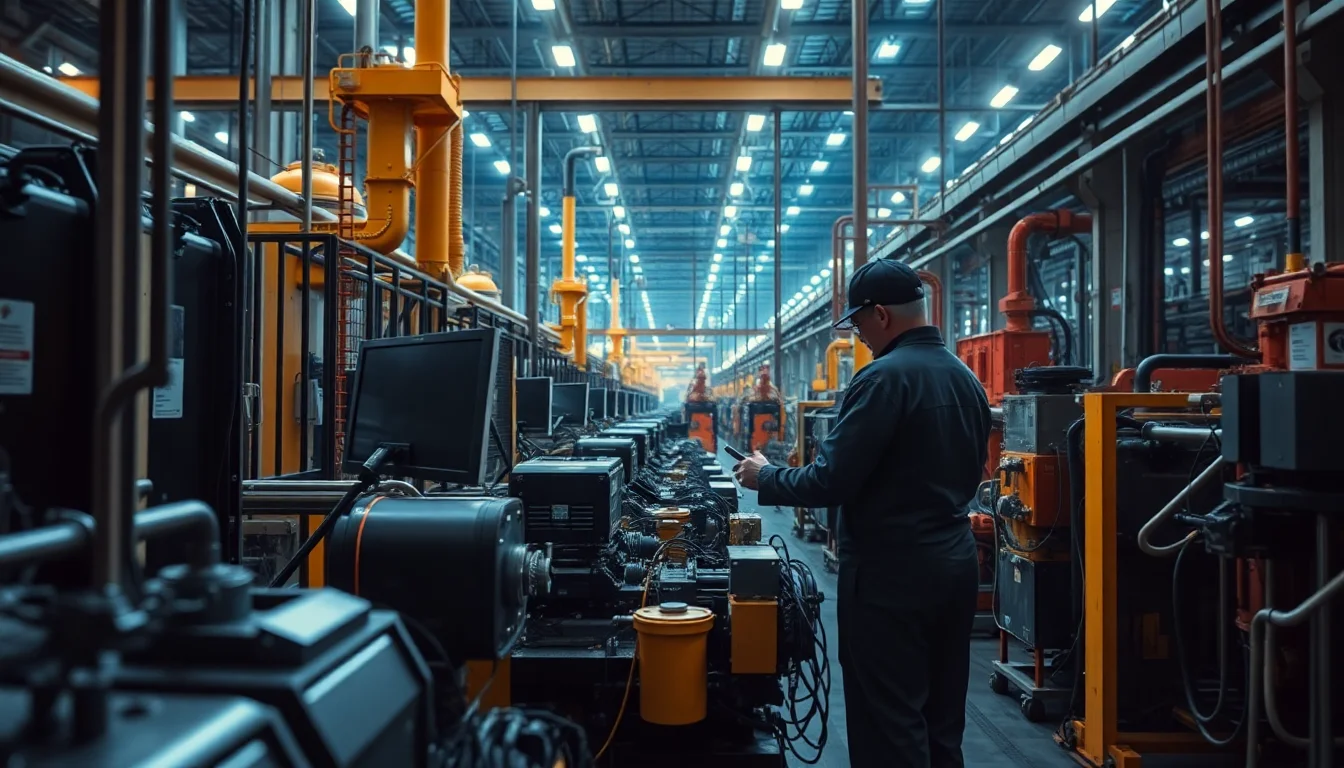
Most factories are not blank slates. They are brownfield environments: legacy machines, mixed control systems, and integrations that have been patched, extended, and workarounded for years. That matters because the biggest barrier to robotics, autonomy stacks, and physical AI in industry is rarely ambition. It is deployment reality.
Rodriques Johnpeter, global industry segment manager at Harting, framed the problem plainly in a recent industry perspective: manufacturers are trying to layer automation and AI onto plants that were never designed for them. In that setting, the old playbook of big-bang transformation is usually the wrong one. Extended shutdowns are expensive, risky, and often impossible. The better route is incremental: plug in modular components, preserve what already works, and tie every upgrade to a concrete operating target.
That is why the most credible automation strategies today start with interoperability, not reinvention. In a legacy plant, new robotics hardware or physical AI software has to coexist with old equipment, not replace it all at once. Standard interfaces, cleaner data flows, and predictable integration points become the real unlocks. Without them, even a promising pilot can stall when it meets the reality of maintenance windows, vendor lock-in, or a control system no one wants to touch.
Harting’s point is operational as much as technological: data maturity is a prerequisite, not a bonus. Plants need to know what data they can trust, where it comes from, and how quickly it can be used in decisions. If the sensors are inconsistent, the interfaces are brittle, or the asset records are incomplete, then every “smart” layer inherits that weakness. In practice, that means the first win is often not a humanoid robot or an AI agent. It is a more reliable connection between existing equipment and the automation layer above it.
For operators and investors, the KPI conversation has to be just as grounded. In brownfield settings, the most defensible automation business case is rarely built on vague productivity narratives. It is built on two numbers that every plant already understands: downtime and throughput.
A modular upgrade that trims unplanned stoppages, reduces changeover friction, or improves line balance can be judged quickly. Does the new component reduce the time the line sits idle? Does it allow more units per hour without stressing quality or maintenance? Those are the questions that matter when capital is tight and production targets are non-negotiable. If the answer is not measurable, the project is still a concept, not a deployment.
That also changes what success looks like for the people on the floor. In a monolithic transformation model, the operator is often treated as a user of the system. In a modular, interoperable model, the operator becomes closer to an integrator of systems. Maintenance teams need to understand how plug-ins behave alongside existing hardware. Engineers need to validate data handoffs, fault recovery, and versioning across mixed equipment. The job is less about managing a finished platform and more about continuously stitching together a reliable one.
That shift is easy to underestimate from the outside. But it is exactly where brownfield automation either compounds or collapses. A plant can add useful capability without a shutdown only if someone is responsible for keeping the interfaces clean, the data accurate, and the changeover risk low. In that sense, interoperability is not a technical footnote. It is the operating model.
The investors reading this should pay attention to that distinction. The market still tends to reward big narratives: end-to-end AI, fully autonomous factories, the promise of a clean rewrite. Yet the plants generating durable gains are usually doing something much less glamorous. They are deploying in layers. They are buying time with modularity. They are proving value on a line before asking for budget on the next one.
A practical 90-day plan reflects that reality. Start by identifying one process bottleneck with a measurable cost in downtime or throughput. Then map the existing control and data environment before selecting any new automation component. The goal is not to choose the most advanced system, but the one that can integrate cleanly with the plant as it exists today.
Next, define the KPI cadence upfront. Measure baseline downtime, output rate, changeover time, and exception handling before deployment. Track the same metrics weekly after installation, and separate gains from noise. If a component claims to improve performance, it should show up in the numbers fast enough for operators to trust it and for capital allocators to believe it.
Finally, scale only after the first integration proves that the plant can absorb change without disruption. That means standardizing interfaces, improving asset data quality, and documenting what worked so the next line does not start from zero. Brownfield automation succeeds when each step makes the next one easier.
Harting’s perspective is useful precisely because it grounds the conversation in what factories can actually tolerate. The winners in robotics and physical AI will not be the teams that promise the cleanest future. They will be the ones that move production forward without tearing the plant apart.