From promise to production reality
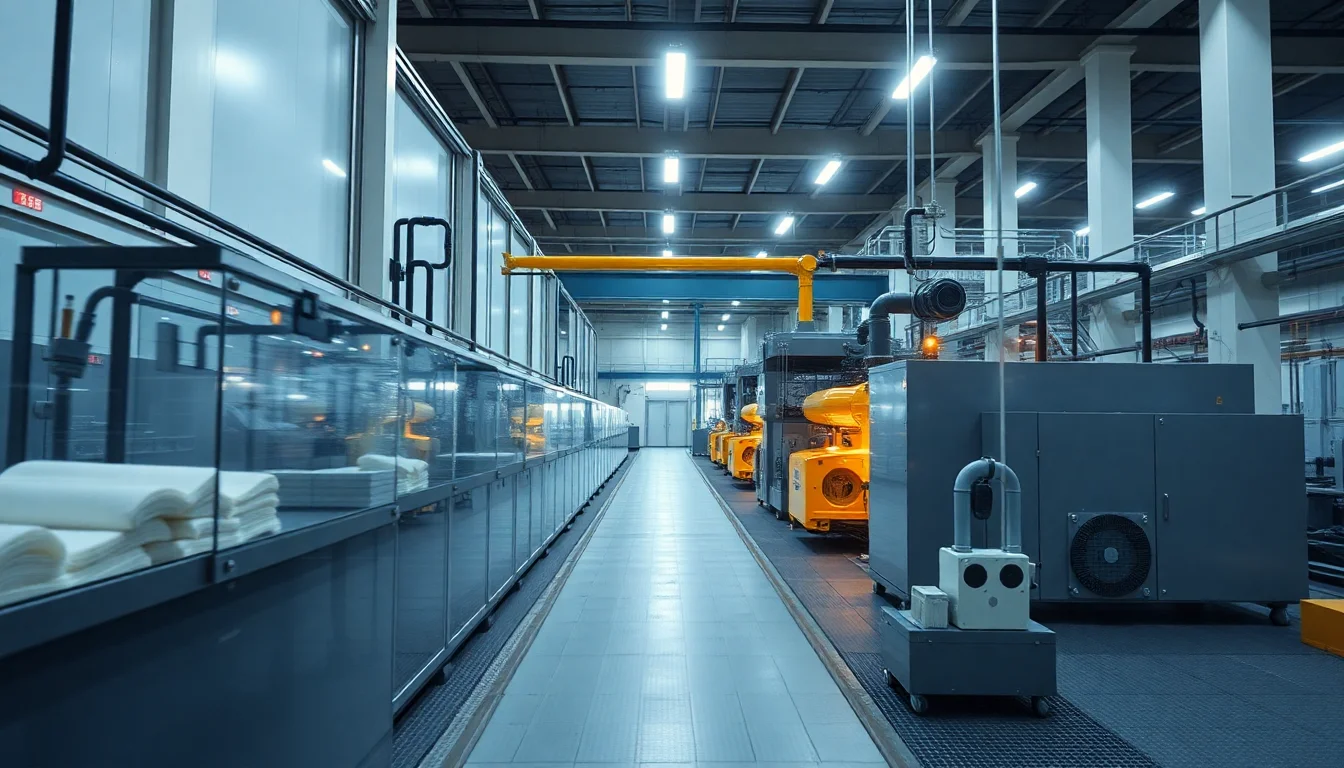
HGHY’s pulp-molding production lines are being positioned less like a sustainability concept and more like a deployable factory system. That is the real change now. The pitch is straightforward: integrated lines for egg trays, cartons, molded-fiber tableware, and industrial packaging, with centralized monitoring and automated conveying that reduce dependence on traditional robot fleets while raising throughput and consistency.
What matters for operators and investors is that the value proposition has shifted from “can this be automated?” to “can this be run reliably in a real plant?” The answer is no longer theoretical. Manufacturers are buying these systems to satisfy stricter environmental requirements, manage labor pressure, and replace plastic packaging with recyclable molded fiber. But the deployment reality is doing most of the work.
The central question is not whether the line can automate a process. It is whether it can be integrated into existing production environments, sustained through maintenance cycles, and operated by teams that can keep the system visible, stable, and productive over time.
Performance in the field: throughput and consistency
The strongest case for HGHY’s approach is operational: integrated conveying and centralized monitoring are designed to improve flow, reduce manual handling, and make production more consistent. In practice, that matters because molded-fiber lines are often judged on how predictably they can move from pulp preparation to forming, drying, and finishing without bottlenecks.
The reporting points to better throughput and product consistency as the headline outcomes. That is meaningful, but it is not universal. Performance still depends on product family and line configuration. A line producing egg trays does not behave exactly like one making molded tableware or industrial packaging, and factories should not assume that gains will transfer cleanly across every SKU mix or every plant layout.
That variability is the deployment risk. Centralized monitoring can help operators see problems sooner, and integrated conveying can smooth handoffs between stages, but neither removes the need to tune the system to local realities. Throughput gains are real only when the line is matched to the product, the drying profile, the material input, and the plant’s ability to keep the system fed and balanced.
In other words: the hardware promise is credible, but the operating envelope matters. Plants that want to scale will need proof not just that the equipment runs, but that it runs consistently under the actual product mix they plan to sell.
Operator impact and training: the people side of robot-free automation
“Robot-free” can be misleading if it suggests low-touch automation. HGHY’s systems still depend on people with the right operational skill set. The labor changes, but the labor does not disappear.
Operators are still needed to manage conveyors, sensors, alarms, and data dashboards. That creates a new training requirement: teams must learn how to interpret system visibility, respond to exceptions, and understand when a problem is mechanical, material-related, or software-related. In a centralized setup, the operator is less likely to be physically moving product and more likely to be monitoring the line, watching for deviations, and coordinating maintenance before a stoppage becomes downtime.
That shift has two implications. First, onboarding matters more than in a conventional line because the system’s advantages depend on disciplined use of the control layer. Second, maintenance capability becomes part of the operator model, not just the engineering model. If a plant cannot train people to manage the dashboards and the day-to-day exceptions, the line may still run, but it will not run to its designed potential.
For deployment teams, that means treating training as a gating item, not an afterthought. The automation can reduce manual intervention, but it also raises the bar for what a competent operator needs to know.
Commercial viability: ROI, scale, and integration challenges
Commercial viability will come down to a few variables that are often glossed over in sustainability narratives: uptime, energy use, maintenance cycles, and retrofit complexity.
If the line stays online and delivers the expected throughput, the economics improve. If maintenance load rises or the system proves difficult to integrate into an existing plant, the payback can erode quickly. That is especially important because HGHY’s appeal is not limited to greenfield builds; much of the opportunity sits in retrofitting or weaving these systems into diverse industrial facilities.
That integration question is central. Plants differ in layout, utilities, staffing, material handling, and downstream packaging requirements. A system that performs well in one facility may need significant adaptation in another. Investors should therefore be cautious about assuming uniform economics across product lines or customer segments.
The sustainability case is still real. Molded fiber reduces reliance on plastic packaging, and automated lines can support higher volume production with more predictable quality. But the investment case only works if the capital outlay is justified by long-term operating performance, not by the appeal of the category alone.
Where physical AI meets industrial packaging
HGHY’s lines sit in a broader industrial shift: automation is becoming more data-driven, more centralized, and more measurable at the point of production. That makes them relevant to the physical AI conversation even if the systems do not look like humanoids or mobile robots. The underlying trend is the same: more sensing, more monitoring, more software-guided execution, and less dependence on ad hoc manual coordination.
The winners in this market will not be the companies that talk most loudly about automation. They will be the ones that can prove the line stays stable, the operators can manage it, and the deployment model scales across plants without hidden friction. That is where molded-fiber manufacturing is heading now.
The market may frame these systems as a sustainability upgrade. In practice, they are becoming a test of industrial discipline. The plants that succeed will be the ones that treat centralized monitoring, maintenance planning, and operator training as core infrastructure, not supporting detail.