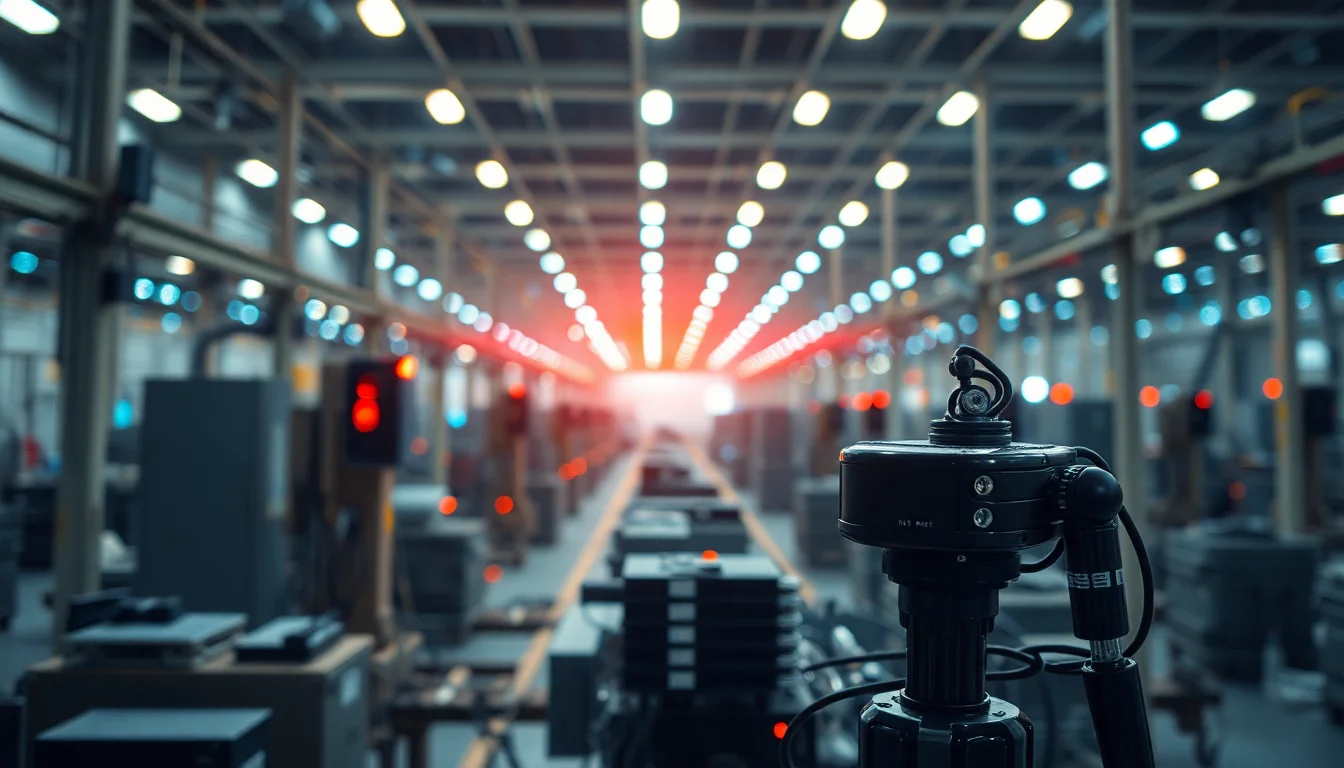
Walk into a factory floor, and the difference between software demos and deployment reality becomes obvious fast. Conveyor speeds drift. Parts arrive out of tolerance. Lighting changes. Fixtures wear. Sensors misread. A human operator reaches into a cell where no one expected a hand. In that environment, a model that answers well to a prompt is not the same thing as a system that can safely and repeatedly execute a task.
That is the core argument in a May 14, 2026 Robotics & Automation News opinion piece by Massimiliano Moruzzi of Xaba.ai: industrial AI cannot be run like a chatbot, because factories are physical systems governed by constraints, variability, and failure modes. Prompt-based AI may sound flexible, but on the line it can misreason, trigger downtime, damage equipment, or create safety risk when the world does not match the script.
For operators, that is a production problem. For engineers, it is a control problem. For investors, it is an adoption problem.
Prompts fall short where reality is messy
Prompt-based AI works best when the cost of a bad answer is low and easy to correct. In manufacturing, the cost structure is inverted. A small error in interpretation can cascade into scrap, rework, interrupted takt time, or a jammed cell that takes an hour to recover. In more serious cases, misclassification of a scene or misinterpretation of a task can push a robot into an unsafe motion.
That is why the factory floor is a hard test for any AI system that depends mainly on language instructions or brittle scripted workflows. The environment is not static. Materials vary. Tool wear changes force profiles. Reflective surfaces and occlusions degrade perception. The operating state at 8 a.m. is not the same as the state at 3 p.m. after a shift change and a maintenance adjustment.
The Robotics & Automation News piece gets to the point: if the AI is not grounded in the physics of the task, it may understand the words but not the work.
Intent-driven autonomy is not just better prompting
“Intent” in physical AI should not be confused with a more elaborate prompt. It means the system understands the goal of the task in context, infers what success looks like under changing conditions, and chooses actions that stay within safety and process constraints.
That is a different design target from instruction-following software. A prompt tells a machine what to do in words. Intent-driven autonomy asks a machine to determine how to achieve the objective when the real world deviates from the example path.
On a line, that means a robot does not simply repeat a pre-scripted pick-and-place sequence. It recognizes whether the part is shifted, whether the gripper has slightly slipped, whether a tool is approaching end of life, or whether the cell should pause and call for human intervention. The system needs enough understanding of dynamics, contact, and limits to adapt without improvising into danger.
That is the practical dividing line between consumer AI and industrial AI. A prompt may tell a model what the operator wants. Physics-grounded autonomy helps the machine decide whether the task is feasible now, under current conditions, with current tooling, and at acceptable risk.
From lab prompts to shop-floor physics
The deployment challenge is not just in the runtime behavior. It starts earlier, in how the system is trained and validated.
If a vendor’s development process is based mostly on curated examples, simulated happy paths, or language-driven instructions, it may look impressive in a demo and still fail in the field. Production systems need exposure to the physical variables that actually shape performance: sensor noise, changing loads, motion constraints, tool wear, latency, and exception handling.
That is why the move toward physics-informed autonomy matters. It shifts the test environment away from idealized inputs and toward real-world dynamics. A useful system should be able to generalize across variability because it has been trained and evaluated against those variations, not just memorized one path through them.
For engineers, this is about robustness and control authority. For operators, it is about fewer line stops and less manual babysitting. For investors, it is about whether a product can scale beyond a pilot cell and survive a procurement process built around uptime and safety.
The most credible vendors will show that they understand the plant as a system, not a demo.
What buyers should ask before committing capital
The most important question is not whether a system sounds intelligent. It is whether it behaves predictably when the floor stops cooperating.
Operators and engineering teams should press vendors for proof in four areas:
- Real-world variability testing. Has the system been validated across changing part positions, lighting, surface conditions, tool wear, and sensor noise, or only in constrained demo environments?
- Safety constraints and fallback behavior. What happens when confidence drops, a grasp fails, or perception degrades? Does the system pause, call for help, reroute, or continue guessing?
- Failure-mode transparency. Can the vendor explain where the model is likely to break, how errors are detected, and how those errors propagate into downtime or scrap?
- Integration with plant metrics. Can the system show impact on cycle time, OEE, scrap, changeover time, recovery time, and operator interventions—not just task success in a benchmark?
Those are not abstract questions. They are the line items that determine whether the business case holds.
If a platform cannot tell you how it behaves under variation, what guardrails it uses, and how quickly it recovers when something goes wrong, then it may be AI for the slide deck rather than AI for the shop floor.
The ROI case depends on reliability, not novelty
The market will keep seeing claims about autonomous robotics, humanoids, and “physical AI” that can learn from instructions. Some of that progress is real. But the deployment bar in manufacturing is much higher than in digital software, because the downside is physical.
A system that is slightly smarter but materially less reliable is not necessarily an upgrade. In production, reliability, predictability, and maintainability are the value drivers. If a vendor’s autonomy stack reduces labor in one cell but increases intervention elsewhere, the ROI can disappear quickly. If it lowers cycle time but creates brittle edge cases, operators will route around it. If it works only when everything is perfect, it will not survive contact with the plant.
That is why the physics-grounded approach matters now. Not because prompts are useless, but because prompts alone do not encode the constraints that determine whether a machine can act safely and economically in the real world.
The next automation wave will not be won by whoever builds the best language interface. It will be won by whoever can deliver machines that understand intent, respect physics, and keep producing when the floor gets messy.