Why factory robotics is shifting from AI hype to deployment reality
The factory floor has a way of exposing the difference between a compelling demo and a deployable system. That distinction came through clearly in an interview with Workr Robotics CEO Ken Macken, whose view is that industrial robotics is moving into a more disciplined phase: less fascination with embodied AI as a general-purpose promise, and more pressure to prove exact task performance in production.
For operators, that means the question is no longer whether a robot can sound intelligent or appear adaptable in a lab setting. It is whether it can do one job, repeatedly, across shifts, in a real plant with real variability. For engineers, it raises a familiar but unforgiving bar: integration, uptime, failure handling, and repeatability matter more than broad reasoning claims. For investors, the shift changes how robotics should be underwritten — not by narratives about near-term general intelligence, but by measurable deployment economics.
Leaping past hype: what changed on the factory floor
AI progress has reignited interest in robots that can perceive, reason, and act in the physical world. That has led to a wave of attention around embodied AI and general-purpose robotics, including high-profile collaborations that feed speculation about what factories might look like when systems become more flexible.
Macken’s stance is more grounded. In the interview, he essentially draws a line between research momentum and industrial readiness. The industry may be making real technical progress, but manufacturers are still buying against the oldest constraint in automation: whether a machine can perform a specific task accurately and repeatedly enough to justify production use.
That framing matters because factory buyers do not optimize for novelty. They optimize for throughput, stability, and cost predictability. A robot that appears versatile in a presentation but falters on edge cases is not an asset; it is a maintenance burden. The practical bar is high precisely because industrial environments are unforgiving.
Deployment reality in practice
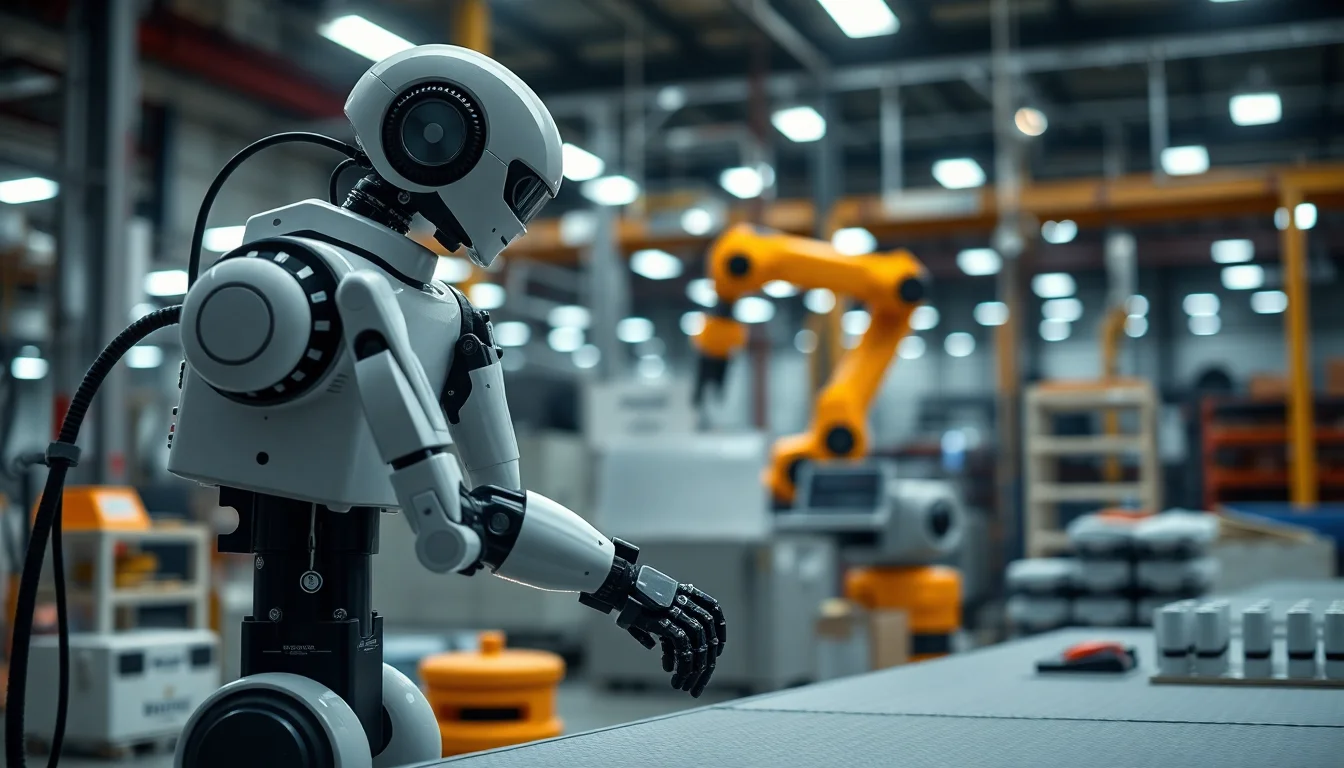
What works today, according to the logic Macken describes, is not broad autonomy but narrow, repetitive execution.
That means practical factory tasks where the inputs, tolerances, and workflows can be constrained well enough for the system to deliver consistent output. It also means the deployment story has to include more than the robot itself. Integration with existing equipment, floor processes, and human workflows often determines whether automation is actually usable. A robot that can perform in isolation but struggles to slot into the plant’s operating rhythm is not yet a production solution.
This is why reliability and exact task performance sit above speculative reasoning in purchasing decisions. A manufacturer needs confidence that the system will keep working after initial installation — not just during a pilot, but across multiple shifts, with real operators, real variability, and the normal interruptions of production life.
That is also why uptime is such a central metric. In industrial settings, a robot’s value is not measured by how clever it seems; it is measured by how predictably it contributes to output. If a deployment introduces downtime, process friction, or a support burden that exceeds the labor it replaces, the economics break quickly.
Pay-as-you-go automation and the economics
Workr Robotics’ model, as presented in the interview, is notable because it tries to align pricing with deployment reality. Paying for automation by the hour is not just a billing choice; it is a risk-sharing mechanism.
For buyers, hourly pricing can make automation easier to evaluate because cost is tied to observed performance rather than to a large fixed commitment upfront. That matters when the primary concern is whether the system will actually fulfill the task in a production environment. If the robot underperforms, the economic exposure is more visible. If it performs well, the buyer can scale usage in step with operational confidence.
For a company selling automation, the model also creates a direct incentive to optimize reliability. If the machine is billing time, then uptime, shift continuity, and steady task execution are the product. That is a cleaner fit with industrial buying than broad claims about future flexibility.
The deeper implication is that robotics business models may need to look more like service-level commitments than software subscriptions. In other words, the market may reward vendors that can absorb deployment complexity and prove repeatable performance, not those that simply sell the idea of autonomy.
Implications for buyers and builders
For operators, the practical lesson is straightforward: ask what task the system performs, under what conditions, and how often it does so without human intervention. Reliability should be defined in operational terms, not marketing terms. If the automation cannot integrate cleanly into current workflows, then even impressive capabilities may not translate into usable output.
For engineers, the evaluation stack should stay anchored in deployment reality. That includes task specificity, failure recovery, sensor and control robustness, and the friction of connecting to existing systems. A promising autonomy stack is not enough if the integration path is brittle or the system cannot hold performance over time.
For investors, the interview is a reminder to separate technological direction from commercialization readiness. Industrial robotics may benefit from AI advances, but capital should still follow evidence of exact task performance, uptime, and repeatable deployment economics. The right question is not whether embodied AI is advancing in the abstract. It is whether the product has crossed the threshold where factory customers will trust it in the middle of real production.
That is the practical gap Workr Robotics is leaning into: a market where the winners may be the companies that are willing to price, measure, and deliver automation like an industrial utility rather than a speculative intelligence system.