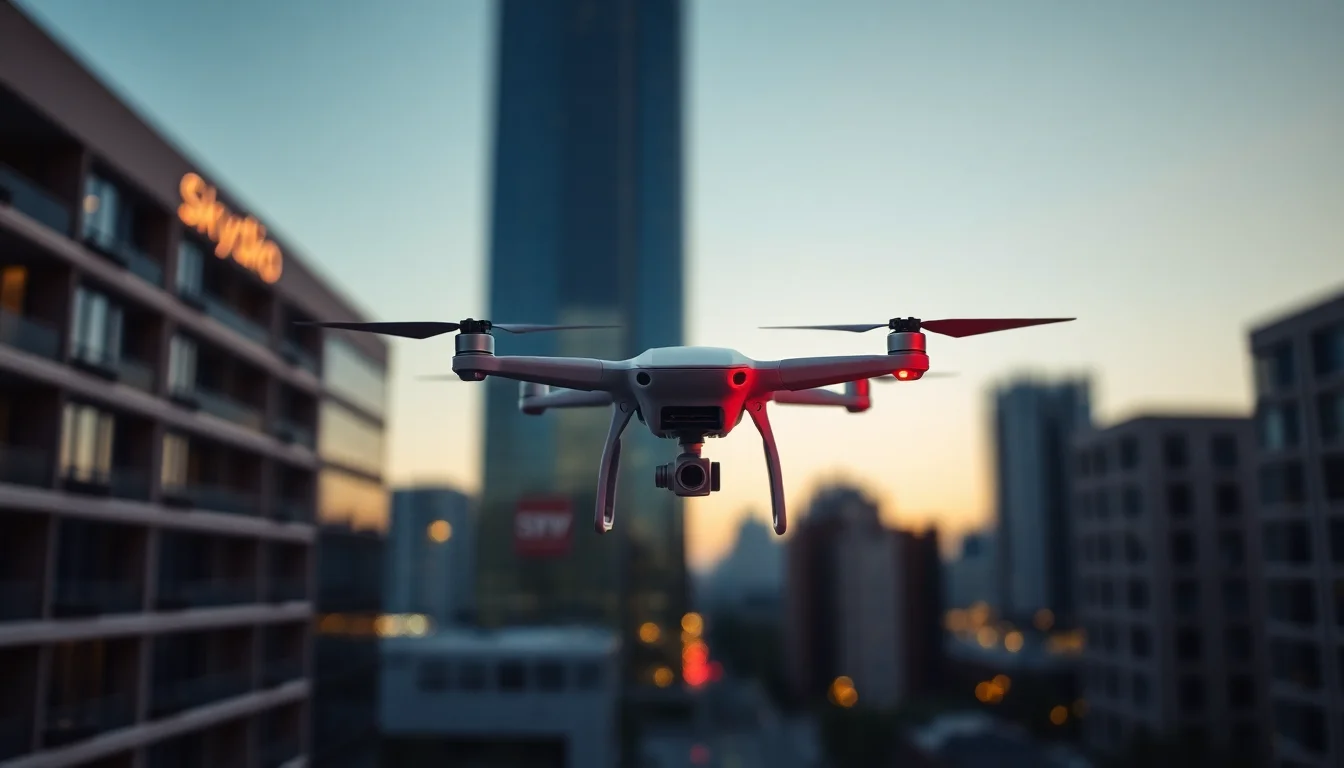
Skydio’s shift from consumer hardware to enterprise deployments is not just a market rebrand. It is a bet that autonomous, sensor-rich drones can survive contact with the messier realities of infrastructure inspection, emergency response, and security work.
That matters because the easy part of drone autonomy is flight. The hard part is proving that a system can be trusted by operators who need repeatable outcomes, documented safety controls, and a clear economic case. In a recent discussion, Skydio CEO Adam Bry argued that Silicon Valley should not draw blanket red lines around drone use. The more interesting point for operators and investors is what happens when the technology leaves the demo and enters the field.
Pivot to enterprise: Skydio’s deployment-first strategy
Skydio’s enterprise pivot reflects where demand has held up. Utilities, public-safety agencies, and critical-infrastructure operators want drones that can inspect equipment, support incident response, and reduce risk without requiring a highly specialized pilot for every mission. That is a different buying motion from consumer drones, and it pushes the product toward deployment reality rather than feature chasing.
In that environment, the value proposition is not simply that a drone can fly itself. It is that a sensor-rich platform can capture usable data in constrained environments, navigate around obstacles, and do so in ways that fit existing operational workflows. For Skydio, the enterprise market is the proving ground for whether autonomous systems can become routine tools rather than occasional specialty devices.
The critical-infrastructure focus also changes the standards. A utility inspector or public-safety commander is not evaluating a drone on novelty. They are asking whether it can support a repeatable inspection route, whether it can be maintained in the field, and whether its outputs can be trusted enough to inform action. That is the real enterprise pivot: selling reliability, not just autonomy.
Deployment reality: what operators actually need from autonomy stacks
The term autonomy stacks gets used loosely, but operators care about the parts that fail least often. End-to-end autonomy has to include sensing, perception, navigation, obstacle avoidance, mission planning, and safe fallback behavior. If any layer is brittle, the system becomes a supervised toy instead of an operational asset.
Sensor fusion is central here. Enterprise drones working near transmission lines, industrial plants, bridges, or emergency scenes need to process a noisy environment, not a clean one. That means the platform has to make decisions based on multiple inputs and still behave predictably when conditions change. The operational requirement is not just “avoid crashing.” It is “complete the mission while staying inside safety constraints.”
That distinction is why maintainability matters as much as autonomy. If a drone requires constant tuning, ad hoc troubleshooting, or specialized support to stay in service, the deployment model starts to collapse. Operators want tools that can be scheduled, launched, audited, and returned to service with minimal friction. In physical AI, the interface between software intelligence and field reliability is where most economics are won or lost.
Operator impact and ROI: workflows, uptime, and maintenance
The ROI case for enterprise drones depends on workflow compression. A drone that shortens an inspection from hours to minutes, reduces exposure to hazardous environments, or helps a public-safety team map an incident faster can create value quickly. But those gains only hold if the device fits the organization’s day-to-day process.
That means data pipelines matter. The drone’s output has to land in systems operators already use, whether that is asset-management software, incident-command tools, or inspection workflows. If imagery and telemetry are hard to export, hard to tag, or hard to reconcile with other records, the system adds labor instead of removing it.
Uptime is another hidden variable. A drone fleet is only as useful as its availability during real events, and real events do not wait for a maintenance window. Batteries, sensors, firmware updates, weather limitations, and charging logistics all shape the economics. A platform with strong autonomy but poor fleet management may look advanced and still underperform in practice.
Lifecycle cost is where many deployment narratives get stress-tested. Enterprise buyers are looking beyond unit price to training, servicing, software support, replacement cadence, and the time required to keep the fleet operational. If the cost of ownership is opaque, adoption slows. If the workflow saves enough time and labor, it can justify scale.
Commercial viability and policy friction: what it takes to scale
Skydio’s argument lands in a market where regulation and safety considerations cannot be separated from product design. Public-safety applications and infrastructure work are highly sensitive to permissions, mission boundaries, and operating conditions. That does not make the opportunity smaller. It makes the operating model stricter.
For autonomous drones to scale, the commercial package has to look predictable. Buyers need a clear safety case, documented controls, and a support model that does not depend on heroic intervention from the vendor every time conditions change. They also need confidence that the platform can fit within regulatory constraints rather than forcing operators into exception-seeking behavior.
That is where policy and product meet. A company can talk about autonomy in abstract terms, but enterprise customers buy around risk. They want to know how the system behaves in low-light conditions, how it handles degraded links, what happens when a mission aborts, and how much human oversight is actually required. Those are not theoretical questions; they determine whether procurement moves forward.
Bry’s pushback against red lines is best understood in that context. The market is not asking for ideological openness to drone use. It is asking whether autonomy can be made safe enough, controlled enough, and economical enough to support real deployment. That is a narrower, harder standard — and the one that will decide whether physical AI in the air becomes a durable business or remains a promising pilot program.