Humanoid robots keep getting better at the parts that look good on camera: walking, balancing, jumping, and recovering from awkward moments. But Sharpa is making a different argument in a new interview with Alicia Veneziani: the real bottleneck for useful humanoids is not locomotion, it is dexterous manipulation and tactile sensing.
That matters because deployment is where the story changes. Operators do not buy a robot for its best demo. They buy it for its ability to repeat a task safely, at acceptable cycle time, across thousands of edge cases. On that score, the hands may matter more than the feet.
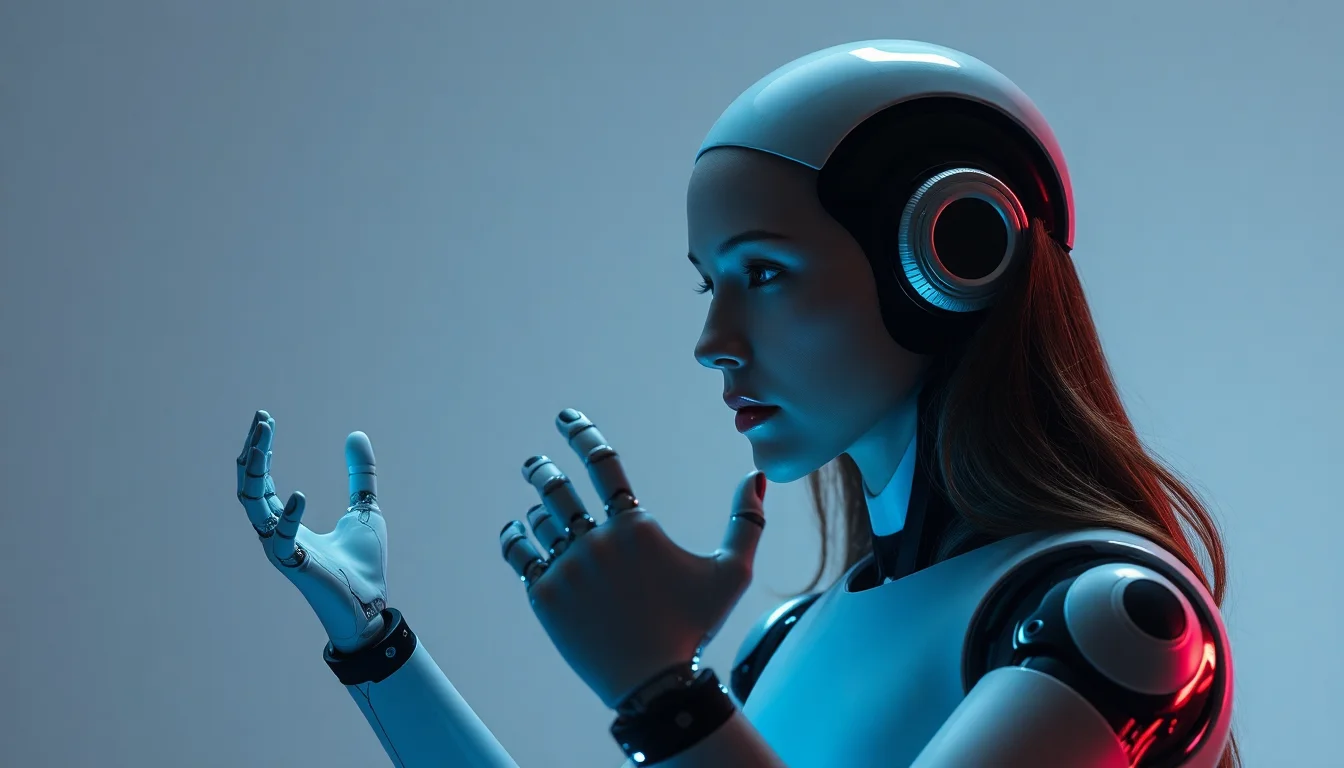
Sharpa’s thesis is straightforward. If a humanoid cannot reliably grasp, orient, press, adjust, and recover with humanlike sensitivity, it will struggle to move from the lab to the line. The company’s Wave hands are its answer: a full platform that bundles hardware, data, and AI, with the goal of enabling reliable manipulation learned from human demonstrations.
The interview lands at a time when humanoid attention is still being pulled toward headline demos. At CES, Sharpa showed autonomous routines such as dealing blackjack, taking photographs, assembling pinwheels, and playing ping-pong. Those demonstrations are useful as proof points, but they also expose the gap between controlled show-floor success and real deployment. A task that works in front of visitors for a few days is not yet a production system that can survive a factory’s variation, wear, and downtime requirements.
That is why dexterity is the gating factor in Sharpa’s framing. Walking gets a robot to the station. Hands get it to do the work. In industrial settings, the challenge is not just picking up an object once; it is handling changing parts, imperfect placement, surface variation, lighting changes, tool wear, and human proximity without degrading performance. Tactile sensing is central to that problem because vision alone often cannot tell a system how hard it is pressing, whether a part is slipping, or whether contact has gone wrong.
For operators, the practical question is whether Wave can reduce the amount of custom engineering required per task. If the platform really combines hardware, data pipelines, and embodied AI in a way that supports learning from human demonstrations, then the value proposition is not just a better hand. It is a shorter path from task definition to fielded capability.
That bundled approach is important because dexterity is not only a mechanical problem. The hand, the sensor stack, and the learning system have to co-evolve. Data from real manipulation attempts has to be usable. Control has to be stable enough to benefit from that data. And the resulting behavior has to be reliable enough that an operator can trust it around people, machines, and production schedules. A compelling prototype without that loop is still a prototype.
The deployment reality is harsher than the demo environment. In the factory, every new task creates questions about integration with existing autonomy stacks, safety envelopes, cycle time, maintenance, calibration, and operator oversight. A manipulation system that is impressive but brittle may still be useful in research or pilot settings, but it will not survive a procurement review unless it can demonstrate repeatability and a believable cost-per-task case.
That is where the investor lens converges with the operator lens. Investors do not just need evidence that humanoid hands can do clever things. They need a path to repeatable performance, scalable data collection, and a feedback loop that improves the system over time. If Wave can turn human demonstrations into increasingly robust manipulation policies, that creates a plausible platform story. If it cannot, the product risks remaining a showcase rather than an operating asset.
The interview is therefore less about hype than about constraint. Sharpa is arguing that the market should stop treating manipulation as a secondary feature and start treating it as the core deployment problem. That is a more demanding thesis, but also a more credible one for anyone who has tried to automate real work.
For operators and investors, the next questions are concrete. Does Wave improve task success rates in messy conditions, not just curated ones? How much human intervention is still needed after deployment? How quickly can new manipulation skills be taught from demonstrations? And does tactile sensing actually raise reliability enough to justify the added system complexity and cost?
If Sharpa can answer those questions with field data rather than show-floor footage, the Wave platform could move humanoids closer to repeatable deployment. If not, it will join a long list of impressive robotics systems that were better at attracting attention than at doing work.