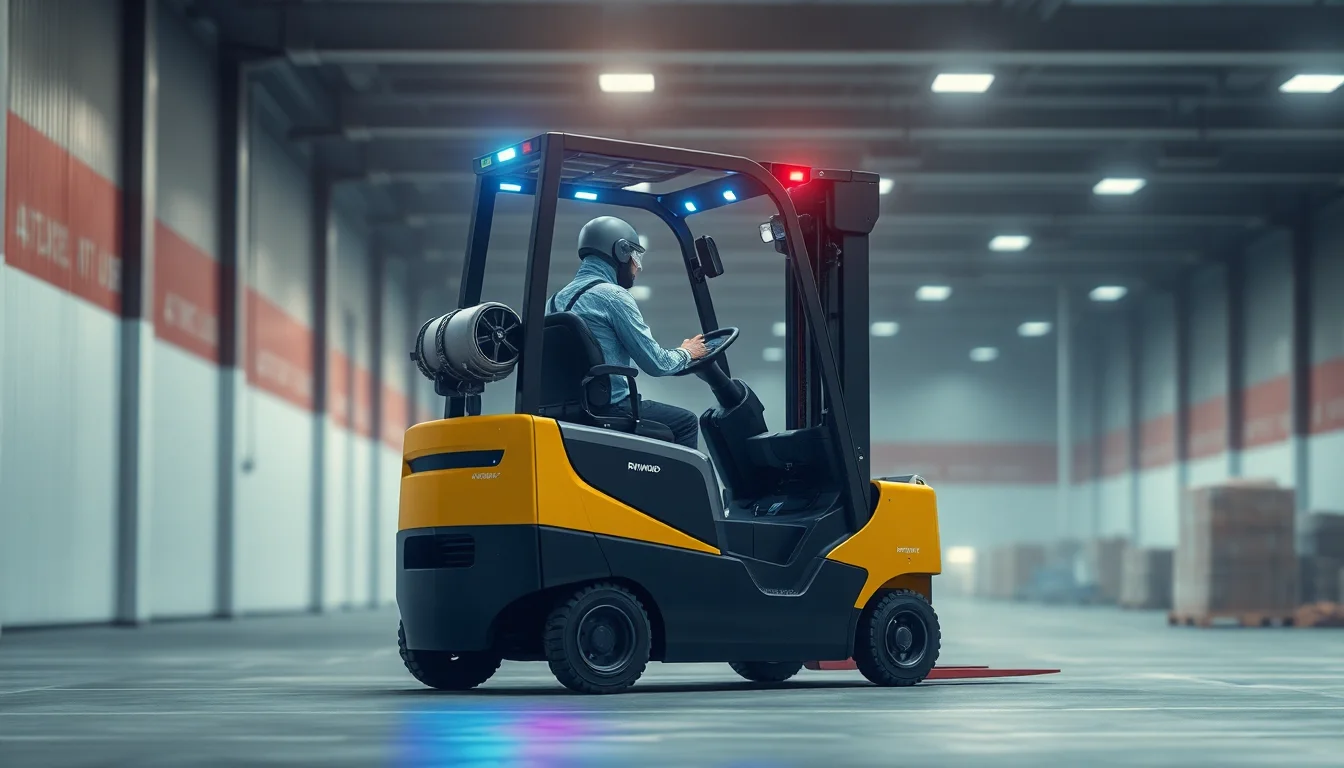
Raymond’s new collaboration with Third Wave Automation is notable not because it introduces the idea of autonomous lift trucks, but because it pushes AI-enabled physical automation closer to something operators can actually buy, deploy, and support at fleet scale. Third Wave says its shared autonomy platform will be offered through Raymond’s ecosystem, extending automation across select Raymond lift trucks and building on collaboration that has been developing since 2021. The backing matters too: Toyota Ventures and Woven Capital have both invested in Third Wave, which gives the effort a stronger strategic signal than a typical point-solution pilot.
The practical question is whether this is a real step toward scalable physical AI in warehouses or just a more polished version of the same automation promise. In lift-truck operations, deployment reality tends to be where the hard problems show up. Vehicles must fit into existing traffic patterns, work orders, charging and maintenance routines, and safety protocols without slowing the building down. Shared autonomy may lower the burden of full autonomy by keeping a human in the loop, but it still has to mesh with how operators move pallets, hand off tasks, and intervene when the environment shifts.
That integration layer is where many warehouse robotics programs get stuck. A system can look strong in a controlled pilot and still struggle when it is asked to live inside a broader Raymond fleet, with mixed vehicle types, varied aisle conditions, and different site-level operating disciplines. Data flow becomes less clean, training takes longer, and support expectations rise. If Raymond is serious about making Third Wave part of its ecosystem rather than a narrow add-on, deployment quality will matter as much as the underlying autonomy stack.
From a system-performance standpoint, the right metrics are fairly concrete. Throughput gains only matter if they persist across shifts and facilities. Flexibility matters if the trucks can handle task variation without constant reconfiguration. Safety matters if the autonomy layer reduces incidents or near misses without pushing more cognitive load onto operators. And uptime matters because a truck that spends too much time in exception handling, remote assistance, or service is not an automation asset; it is a more complicated asset.
Third Wave describes its platform as delivering gains in throughput, flexibility, and safety, but warehouse buyers will want to see those claims translated into operational evidence. That means watching sensor reliability in dusty, congested, and high-traffic environments; edge compute latency when conditions change quickly; and fault-handling when the system encounters blocked paths, unstable loads, or ambiguous human behavior. In other words, the technology has to perform not only when things are easy, but when the warehouse is doing what warehouses do.
Operator impact is another make-or-break issue. Shared autonomy only creates durable value if human operators trust the system enough to use it correctly. That requires training pipelines that are short enough to scale, interfaces that are intuitive, and safety procedures that make the handoff between human and machine predictable. If operators view the system as brittle, intrusive, or hard to recover from when it fails, productivity gains can disappear quickly.
For Raymond, that also means the customer experience has to extend beyond the truck itself. The best deployment path will likely depend on service teams, maintenance schedules, software updates, and site-level change management that are tightly coordinated. Physical AI in a warehouse is rarely just a software purchase; it is an operating model shift.
Commercially, the backing by Toyota Ventures and Woven Capital suggests the investors closest to the Toyota ecosystem see a long runway for AI-enabled material handling. That support does not guarantee returns, but it does imply confidence that autonomy in lift trucks can move from niche deployments toward broader fleet adoption. Still, the business case will hinge on whether customers can justify the added software, integration, and support costs against labor savings, higher utilization, reduced error rates, and improved safety outcomes.
That is where the ecosystem risk remains real. OEMs, software providers, and service partners all need to stay aligned on updates, maintenance, and feature evolution. If the platform requires too much customization or site-specific tuning, scaling slows. If it proves serviceable across multiple facilities with consistent uptime and operator acceptance, the economics improve quickly. For most buyers, the question will not be whether autonomous-ready lift trucks are possible. It will be whether they are operationally boring enough to trust.
Over the next 12 to 18 months, the indicators to watch are straightforward: deployment density across sites, uptime and exception rates, safety incident trends, training completion, and whether throughput gains hold after the pilot phase. The Raymond-Third Wave collaboration is a meaningful scale-up signal, but its significance will ultimately depend on whether shared autonomy can deliver repeatable performance in the messy conditions of real warehouses. That is the test physical AI has to pass if it wants to matter beyond the demo floor.