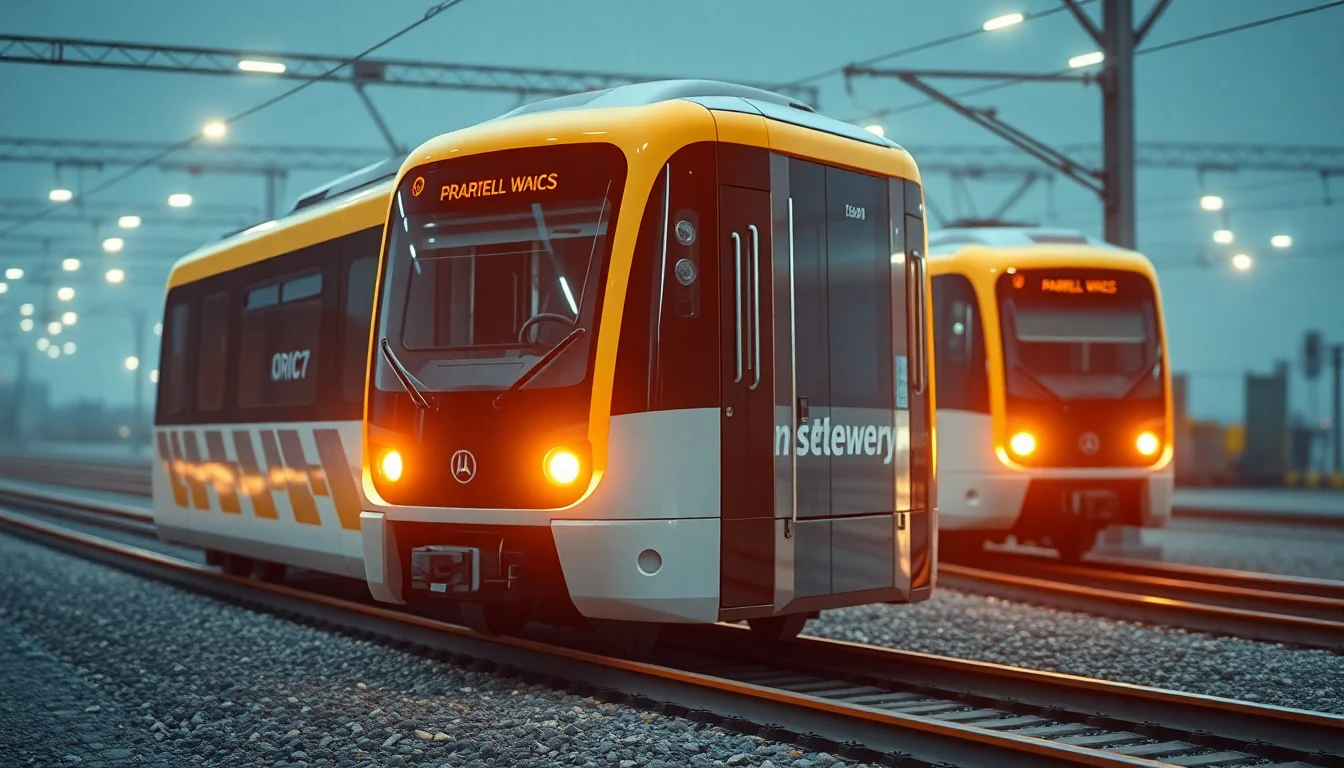
Parallel Systems is now being judged on deployment reality
Autonomous freight rail has spent years as a promising slide deck idea. Parallel Systems is trying to make it a yard-level operating system.
In an interview with Robotics & Automation News, founder and CEO Matt Soule described the company’s goal as building “the world’s first autonomous freight rail system” around battery-electric railcars that move in small, self-propelled platoons and are coordinated by centralized software. That framing matters because it shifts the discussion from concept to deployment reality. For operators, engineers, and investors, the real question is no longer whether autonomous rail sounds plausible. It is whether it can survive the operational constraints that decide uptime, throughput, and ROI.
The pitch is straightforward: use autonomous, battery-electric railcars to make rail more flexible, especially for shorter-haul freight where traditional unit trains can be awkward and truck competition is strong. In theory, self-propelled platoons can be assembled and routed more dynamically than locomotive-led consists, giving shippers something closer to on-demand, zero-emission freight.
That is the attractive part. The harder part is everything that happens once the system leaves the lab.
Platoons, autonomy stack, and centralized software
Parallel Systems is not selling a conventional locomotive retrofit. It is proposing a different operating model. Individual battery-electric railcars can function as autonomous vehicles, then combine into platoons that are orchestrated by centralized software rather than by a diesel locomotive and a traditional crewed operating pattern.
That architecture is what makes the concept interesting to logistics teams. If the software can coordinate vehicle movement, spacing, dispatch, and routing with enough reliability, the system could support more flexible freight flows than fixed consists do today. In practical terms, that could open rail to lanes where shippers want smaller increments of capacity, lower emissions, and more responsive service.
But centralization cuts both ways. The more the system depends on software to choreograph movement, the more important edge-case handling becomes. Rail is a safety-critical environment with a long tail of exceptions: imperfect track conditions, inconsistent yard choreography, weather, maintenance windows, and handoffs with legacy infrastructure. Any autonomy stack can look convincing in clean demonstrations. The real test is how it behaves when the yard is busy, the schedule slips, or a sensor degrades.
Deployment reality is where the thesis gets tested
This is where the hype around autonomous rail runs into first principles.
Pilot deployments do not just need to prove that a vehicle can move itself. They need to show that the whole system can be integrated into existing rail yards, interact with switching operations, and maintain predictable performance under operational load. For Parallel Systems, that means sensor reliability, fault handling, communication robustness, and the ability of centralized software to coordinate platoons without creating bottlenecks of its own.
Those details sound mundane, but they are the core of deployment reality. A freight operator does not buy autonomy; it buys a service level. If the system cannot sustain uptime, the throughput gains vanish. If maintenance intervals are too frequent, battery-electric advantages can be offset by service disruption. If the safety case is still being assembled, commercial rollout slows down regardless of how elegant the product looks in a demo.
The interview suggests a company still working through those thresholds rather than claiming to have solved them. That is healthy. It also means investors should resist reading a promising technical architecture as proof of commercial readiness.
What changes for operators and maintenance teams
If Parallel Systems works, the biggest shift will not be the removal of a locomotive seat. It will be the redesign of rail operations around a different set of frontline responsibilities.
Operators would move from direct locomotive operation toward supervising autonomous platoons and managing exceptions. Maintenance teams would need to support battery-electric systems, sensor packages, and the software and communications layers that keep the fleet coordinated. That implies new inspection routines, new diagnostics, and a different failure model than the one rail shops are built around today.
For an engineering organization, that is both a benefit and a burden. Battery-electric railcars may simplify some parts of the mechanical stack while increasing dependence on electronics, software updates, and charging or energy-management discipline. The operational question is not just whether the system runs, but how quickly it can be returned to service after a fault, and how much specialized labor is required to keep it running.
The human factor also matters. A deployment that asks yard crews to trust autonomous platoons needs to earn that trust through repeatable performance, not marketing.
The economics: where ROI could work, and where it may not
The case for commercial viability rests on whether the operating savings outweigh the new costs.
Parallel Systems is betting that flexible platoon operations, lower energy costs, and zero-emission freight positioning can reduce the cost of moving short-haul cargo. If the system can make rail more responsive, it could win freight that currently defaults to trucks because rail is too rigid, too slow, or too hard to integrate into daily logistics schedules.
But ROI will depend on more than the promise of lower fuel spend. Capital intensity remains a major hurdle. Battery-electric railcars are expensive assets. Autonomy hardware and centralized software add complexity. Maintenance models are still maturing. And regulatory cycles can stretch deployment timelines, which pushes payback farther into the future.
That is the key financial tension for operators and investors alike: the system may be technically attractive before it is economically obvious. The path to commercial viability likely requires a narrow first market where route density, yard integration, and freight profiles are favorable enough to support utilization and uptime.
For now, the economics should be evaluated less like a broad platform story and more like an operations case study. Can the system move freight often enough, reliably enough, and cheaply enough to justify its capital stack?
What to watch next
The next milestones will tell the market whether this remains a compelling concept or becomes a credible deployment path.
The most important indicators are not promotional headlines but operational ones: pilot performance, safety validation, yard integration progress, and evidence that the platoon model can scale without degrading reliability. Investors should watch for whether Parallel Systems can show that autonomous, battery-electric railcars hold up in real freight workflows, not just in controlled demonstrations.
If the company can prove sustained uptime and clean handoffs inside existing rail environments, the thesis gets stronger. If integration friction or maintenance complexity keeps surfacing, the commercial timeline gets longer.
That is why Parallel Systems matters now. It sits at the intersection of autonomy, industrial deployment, and freight economics. The company is trying to turn self-propelled platoons and centralized software into on-demand, zero-emission freight. Whether that becomes a real operating model will depend on the unglamorous metrics that matter most: uptime, maintenance burden, throughput, safety, and ROI.