PAL Robotics is taking another pass at one of robotics’ hardest problems: making advanced manipulation easier to deploy outside a carefully staged lab.
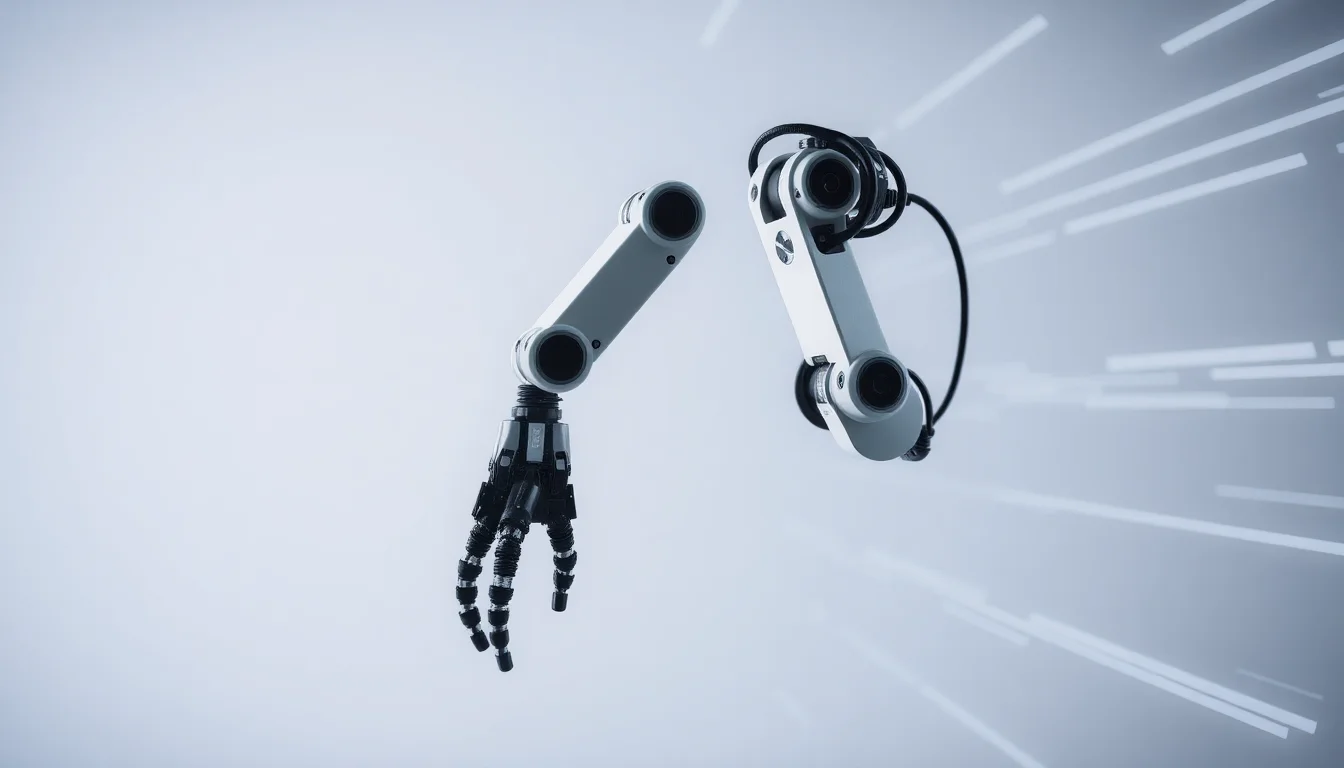
The Barcelona-based company says its new arm platform combines a 7-DoF mechanism, ROS 2/ros_control architecture, a 1 kHz control loop, and its Series Elastic Actuators, or SEA Arms. The package weighs under 10 kg and is rated for a 3 kg payload. PAL plans to formally unveil the system at ICRA 2026 in Vienna, where it will disclose the robot’s name, full specifications, and live demonstrations.
On paper, the combination is straightforward. In practice, it points to a familiar robotics tradeoff: the more the control stack looks like a serious manipulation platform, the more the deployment burden shifts to calibration, safety validation, sensor alignment, and lifecycle maintenance.
That is what makes this announcement interesting. PAL is not just adding another research arm to the catalog. It is leaning into the set of characteristics that operators and autonomy teams increasingly ask for when they want to move beyond proof-of-concept behavior: open interfaces, predictable control, and hardware that does not require a complete integration rewrite every time it changes hands.
What the specs mean in deployment terms
A 7-DoF arm gives developers the kinematic flexibility needed for complex manipulation tasks, especially in cluttered environments or when obstacle avoidance matters. The extra degree of freedom can make it easier to find feasible grasps and maintain motion options around constrained workspaces.
The 1 kHz control loop is equally important, though not because it guarantees better performance in isolation. High-frequency low-level control is what lets a manipulation stack respond quickly enough for dynamic tasks, force-sensitive interactions, and tighter coordination between motion planning and actuation. It does not eliminate the need for good sensing, stable calibration, or robust software, but it does give the control system more room to absorb disturbances.
PAL’s choice of ROS 2/ros_control also matters. For operators and engineering teams, that signals a platform built around familiar middleware rather than a closed proprietary stack. In deployment terms, that can reduce friction in areas like controller integration, simulation-to-hardware transfer, and interoperability with existing autonomy software. It also makes the arm easier to evaluate for groups already invested in ROS-based pipelines.
The SEA Arms implementation adds another layer. Series elastic actuation is commonly associated with safer, more compliant robot behavior because the elastic element can help modulate force and improve interaction characteristics. That is useful in manipulation settings where contact is part of the job, not a failure mode. But SEA systems also create their own operational questions, including maintenance overhead, tuning complexity, and how performance drifts over time under repeated use.
The size and payload figures reinforce the deployment story. An under-10-kilogram arm with a 3-kilogram payload sits in the zone where portability starts to matter. That is not a heavy industrial payload class; it is a more mobile manipulation profile that may fit research benches, pilot cells, mobile robots, or light industrial tasks. In other words, the system looks designed to move more easily between use cases, not to dominate one fixed workflow.
Why operators should care
For operators, the practical value of a platform like this depends less on the headline specs than on how it behaves after installation.
Open standards can shorten integration time, but they do not remove the need for system-level work. Teams still need to validate coordinate frames, tune controllers, define safety interlocks, and make sure the arm behaves consistently when paired with different cameras, grippers, planners, and perception stacks. A 1 kHz loop only helps if the rest of the stack is stable enough to make use of it.
That is why the deployment reality remains the central question. In a lab, a 7-DoF arm with a high-frequency control loop may look elegant. In the field, the issues are usually more mundane: calibration drift, cable wear, thermal behavior, actuator health monitoring, and the operational discipline required to keep a manipulator within spec over long runs.
For autonomous manipulation, those concerns are not side notes. They determine whether the arm can be trusted as a repeatable component in a broader system. If a platform is going to support autonomous picking, positioning, inspection, or assisted manipulation, engineers need predictable interfaces and a clear maintenance model. Otherwise, the integration cost erodes the value of the hardware.
What the market signal is really saying
PAL’s move also says something about where the manipulation market is heading.
Across robotics, there is growing demand for hardware that can bridge research and deployment without forcing teams into a fully custom build. Developers want a platform they can test quickly, modify deeply, and carry into pilot environments with less friction. Investors watching the sector are looking for signs that the ecosystem around physical AI is becoming more usable, not just more impressive in demos.
That is where ROS-based, high-bandwidth manipulation platforms have an advantage. They fit into a broader software and tooling ecosystem that already exists. For commercial developers, that can mean faster prototyping, easier benchmarking, and a clearer path to integration with autonomy stacks that already speak the same language.
Still, the business case is not automatic. Lowering the entry barrier helps, but commercial viability depends on serviceability, support, and whether the hardware can be maintained across real deployments. A platform can be technically compelling and still struggle if it is expensive to keep running or difficult to certify for a live environment.
The ICRA 2026 unveiling will matter because it should clarify how PAL positions the arm beyond the initial specifications. Full dimensions, the final product name, and live demonstrations will help answer a more important question: whether this is a lab-friendly platform dressed for deployment, or a genuinely usable manipulation system designed with operations in mind.
The questions buyers should ask next
The hardware profile suggests promise, but buyers should treat the announcement as an opening bid, not a conclusion.
The main diligence items are familiar: How stable is the arm under continuous use? How often does the SEA-based system need recalibration or service? How well does it integrate with existing perception and autonomy stacks? What does fault recovery look like? And how much engineering effort is required to move from a demo setup to a repeatable operating cell?
Those questions will determine whether the platform becomes part of a production workflow, a pilot program, or a research shelf.
For now, PAL Robotics has done what a credible manipulation platform announcement should do: it has made the technical intent legible. The combination of ROS 2/ros_control, a 1 kHz control loop, 7-DoF kinematics, SEA Arms, under-10-kilogram mass, and a 3-kilogram payload is not a guarantee of deployment success. But it is a meaningful attempt to narrow the distance between advanced AI manipulation in the lab and the constraints that govern field use.