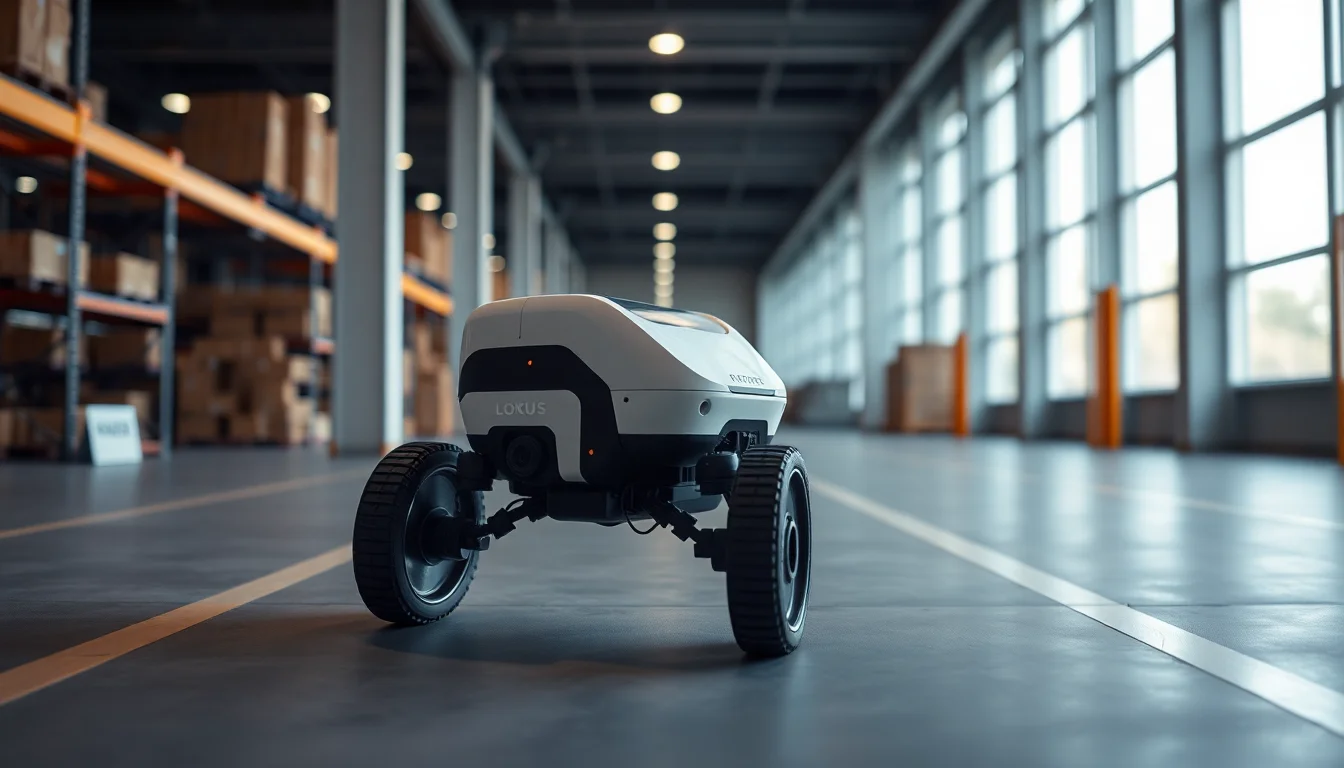
Locus Robotics is relocating its European headquarters to Logistics Campus Aalsmeer, a move that says as much about the state of the market as it does about the company’s own scale.
On paper, the expansion is straightforward: more space for customer demonstrations, solution training, partner engagement, warehouse operations and regional robot lifecycle support. In practice, that kind of facility can matter a great deal for a robotics vendor selling into live operations. It gives the company room to show systems in something closer to production conditions, train site teams before go-live, and support customers after deployment without relying entirely on remote troubleshooting.
That is why the move lands as a deployment signal rather than a pure corporate real-estate story. Locus says it now serves 160+ customers across more than 20 countries and supports more than 17,000 robots in the field. It also deploys hundreds more during peak seasons, which points to an installed base that is no longer experimental. Europe is clearly a meaningful growth market, and the company is acting like a vendor that expects to keep scaling there.
But the operational question is less about square footage than about what that space enables.
Deployment reality: space versus performance
For warehouse autonomy, bigger headquarters are not the same thing as better system performance. A larger customer hub can help shorten the path from sales cycle to pilot to production, but the hard problems remain the ones operators care about most: uptime, integration with the warehouse management stack, and the ability to orchestrate systems across sites and borders.
That matters because deployment pain rarely shows up in a showroom. It shows up when robots have to work alongside existing WMS processes, fit into labor workflows, and maintain predictable throughput under peak demand. The company’s pitch is built around flexible automation for labor constraints, volume volatility and SKU complexity — all legitimate use cases — but those conditions also make reliability and integration discipline more important, not less.
More demo space can reduce friction in evaluation. It can let teams test behavior, compare configurations and align internal stakeholders before committing capital. It can also support better lifecycle readiness, which is often the difference between a system that gets piloted and one that gets rolled out broadly. Still, none of that changes the underlying benchmark: if uptime slips, if orchestration is brittle, or if the system requires too much operational babysitting, the expansion will not matter much to the customer’s bottom line.
Operator impact: what this changes on the ground
For operators and field teams, the most immediate benefit of an expanded European hub is not branding; it is serviceability.
A local automation center can improve the quality of pre-deployment testing, reduce the distance between customer feedback and engineering response, and make it easier to train on-site teams before a system goes live. That can help reduce rookie errors in commissioning and improve the odds that customer workflows are mapped correctly the first time.
It also matters for lifecycle support. In robot-heavy warehouse operations, the real service burden starts after installation. Battery health, fleet behavior, spare parts handling, software updates and exception management all determine whether the deployment performs the way the ROI model promised. A regional hub gives the vendor a better platform for ongoing support, and that can translate into fewer disruptions for operators if the support model is disciplined enough.
The caveat is scale. Supporting a handful of strategic customers from a new hub is one thing; maintaining consistent service levels across multiple countries is another. Cross-border support introduces language, logistics and SLA complexity. If the expanded footprint simply becomes a nicer place to do demos, the operational value will be limited. If it becomes a real service center with tighter response times and better escalation paths, the move starts to look more substantive.
Performance, ramp and ROI: where expectations meet reality
The investment case for this kind of expansion is familiar: more local presence should help Europe grow faster, deepen customer relationships and improve conversion from evaluation to deployment. That is plausible, especially in a market where labor pressure and fulfillment complexity continue to push operators toward automation.
But investors should be careful not to confuse commercial momentum with deployment quality.
For robotics vendors, the long-term economics depend on more than bookings. They depend on how well systems perform once installed, how much support each account consumes, and whether the fleet generates stable throughput without constant intervention. If a larger European hub helps Locus raise uptime, smooth implementation and cut the cost of supporting each site, that could strengthen the commercial model. If not, the added footprint risks becoming fixed cost without commensurate operating leverage.
In that sense, the most important ROI metric is not the new address itself. It is whether customers experience faster deployment, fewer integration issues and higher system utilization after the move. Those are the practical measures that decide whether warehouse automation is viewed as a durable productivity tool or just another complex piece of capex.
What to monitor next
The next phase should be judged by operational indicators, not by the size of the facility.
Watch for:
- Customer adoption rates in Europe, especially whether the hub helps convert pilots into broader rollouts.
- Training outcomes, including how quickly customer teams can move from demo to stable operation.
- SLA adherence and support response times across countries.
- Cross-border service quality, particularly in markets where language and logistics can slow issue resolution.
- Evidence of better uptime, throughput and fleet utilization in deployed systems.
If those metrics improve, the move to Logistics Campus Aalsmeer will look like more than a symbolic expansion. It will look like a company building the support structure needed for physical AI systems to become routine infrastructure in European warehouses.
If they do not, the bigger footprint will still signal ambition — just not necessarily operational readiness.