GFT takes AI from visual inspection to physical action for auto manufacturers
Automotive factories have spent years learning how to use AI to spot defects. The harder problem has always been what happens next.
GFT Technologies says its latest robotic system is built to close that gap. Building on its earlier visual inspection work with Google, the company has launched AI-powered robotic arms that do not stop at flagging anomalies on the line. They are designed to physically remove or reposition faulty parts, keeping production moving rather than waiting for a human to intervene.
That shift sounds incremental on paper. In practice, it is the difference between insight and intervention.
From detection to action at line speed
Most inspection systems in automotive manufacturing have already moved some of the judgment upstream into software. Cameras and models can identify a dented bumper, a misaligned door, a pipe out of spec, or another defect before it travels too far down the line.
But detection-only AI creates a familiar bottleneck: once a problem is flagged, a person still has to make the decision, stop the process, and fix it. That handoff creates delay, and on a modern assembly line, delay is expensive. It can interrupt throughput, force buffers into the process, and increase the chance that a defect continues to move through production before anyone acts.
GFT’s pitch is that the deployment reality of end-to-end AI robotics now matters more than the detection demo. The value is not just seeing a problem earlier. It is resolving it at the speed of the line.
That is why the company is framing the launch around physical action rather than visual intelligence alone.
Three robots, one orchestration problem
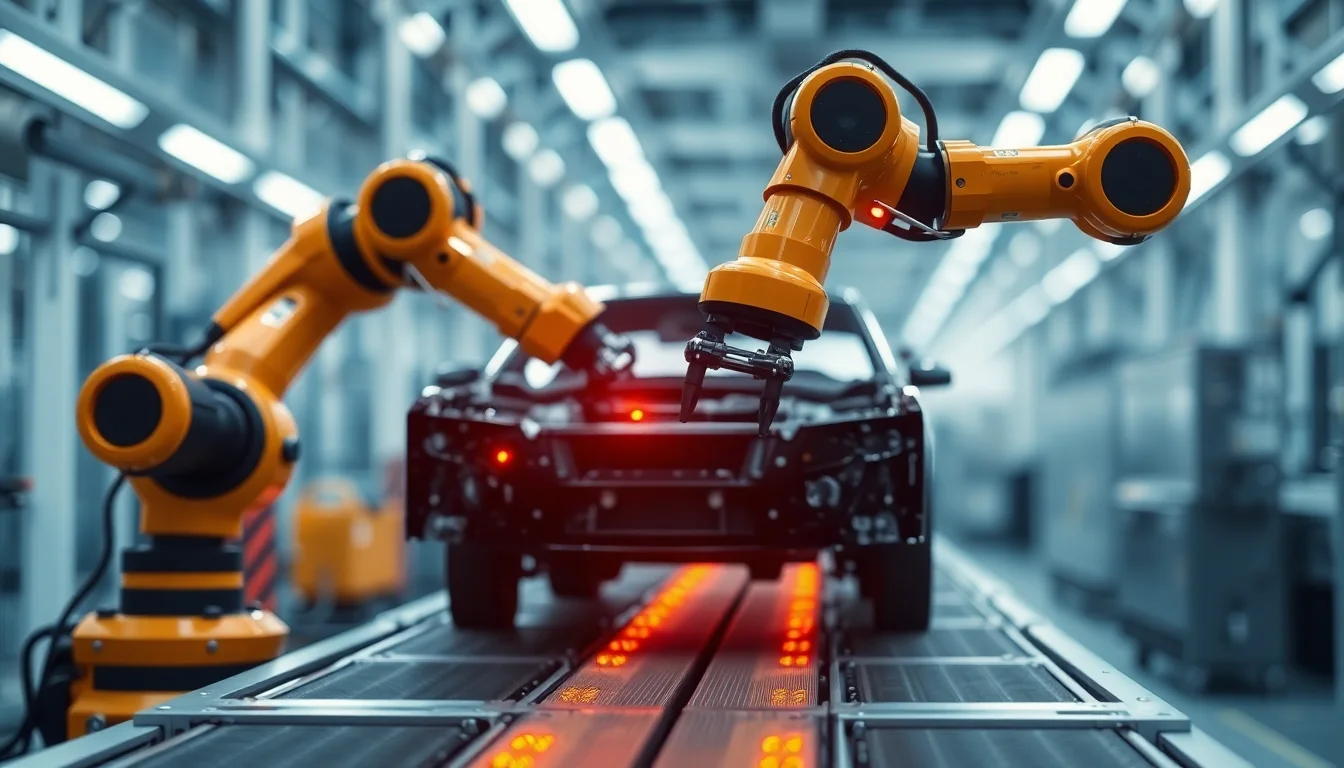
The system is built around three robots stationed along the assembly line.
According to GFT, the robots are coordinated to detect, grasp, and physically remove or reposition components that do not meet spec. The architecture is meant to keep the line moving while acting on defects in place, rather than creating a separate inspection queue or relying on manual rework downstream.
This matters because the technical challenge in automotive production is not simply identifying a faulty part. It is doing so reliably enough, and quickly enough, that the correction itself does not become the new constraint.
In other words, the system has to preserve continuity. If the robots slow the line, add uncertainty, or create awkward interactions between machines and operators, the automation story weakens fast.
GFT’s framing suggests the three-robot setup is intended to distribute the work across the line: one robot for seeing and classifying, another for handling the part, and another for removing or repositioning it as needed. The exact choreography will depend on plant layout, part type, and cycle time, but the operating idea is clear enough. The line should not pause for defect remediation unless it has to.
What changes for operators and technicians
For plant teams, this kind of deployment changes the shape of the job more than it removes the job.
Operators and technicians still need to supervise the process, manage exceptions, and intervene when the system falls outside its expected operating envelope. But the daily workflow becomes more deterministic. Instead of spending time chasing defects manually, staff can focus on monitoring, exceptions handling, and maintenance.
That also means training becomes part of the product story.
Teams have to learn new interfaces, new safety procedures, and new override logic. Maintenance staff need to understand both the robotic hardware and the AI layer that determines when the system acts. Line operators need enough visibility to trust the system without overriding it unnecessarily.
The upside is that well-executed end-to-end automation can improve throughput by reducing stoppages and rework. The downside is that these systems introduce new forms of operational dependency. A plant that becomes reliant on robotic correction needs confidence not only in model quality, but in calibration, fault recovery, and the ability of staff to keep the system running on shift.
Safety and reliability are not side issues
The closer AI gets to physical motion on a production line, the more safety and reliability become central design constraints.
A visual inspection model can be wrong without creating immediate physical risk. A robotic arm cannot. It has to move in sync with the rest of the line, respect plant controls, and behave predictably around people, parts, and adjacent machines. That requires robust safety interlocks, tightly managed integration with factory systems, and clear procedures for stopping or bypassing the automation when conditions change.
Reliability matters just as much as safety.
If the system’s action speed falls behind the pace of production, or if maintenance is too frequent, the business case erodes. GFT’s own positioning underscores that the speed of action on the line is critical to maintaining throughput. That is the operational test for any physical AI deployment: can it keep up without creating a new source of downtime?
Maintenance is part of that equation too. Cameras drift, grippers wear, calibration shifts, and plant environments are not gentle. Industrial AI deployments tend to succeed when the maintenance model is designed in from the start rather than treated as a service afterthought.
The business case: ROI depends on execution discipline
The commercial logic for automating defect remediation is straightforward enough.
If a system can catch and correct faults before they propagate, manufacturers can reduce rework, avoid downstream disruption, and limit the cost of recalls or remedial actions. GFT cites industry economics in which a single recalled vehicle can cost upward of $500 per unit to remediate, a reminder that the financial damage from defects compounds quickly at automotive scale.
That makes rapid intervention attractive on paper. If the system truly keeps production moving and prevents bad parts from advancing, the ROI can be compelling.
But viability depends on more than the promise of lower defect costs.
Deployment timelines, integration complexity, safety certification, training overhead, and maintenance requirements all shape the payback period. A system that works in a narrow pilot but is hard to roll out across a plant network may look impressive without becoming commercially durable.
That is the real test of this launch. GFT is not just selling AI inspection, and not just selling robots. It is trying to sell a workflow in which detection, grasping, and correction are part of the same operational chain.
For automotive manufacturers, that is exactly where the next wave of physical AI will be judged: not by whether it can spot a defect, but by whether it can act on it at line speed, safely, repeatedly, and at a cost structure the plant can justify.