Fanuc’s latest move with Nvidia is less about announcing another simulation tool than about narrowing the gap between the virtual factory and the real one.
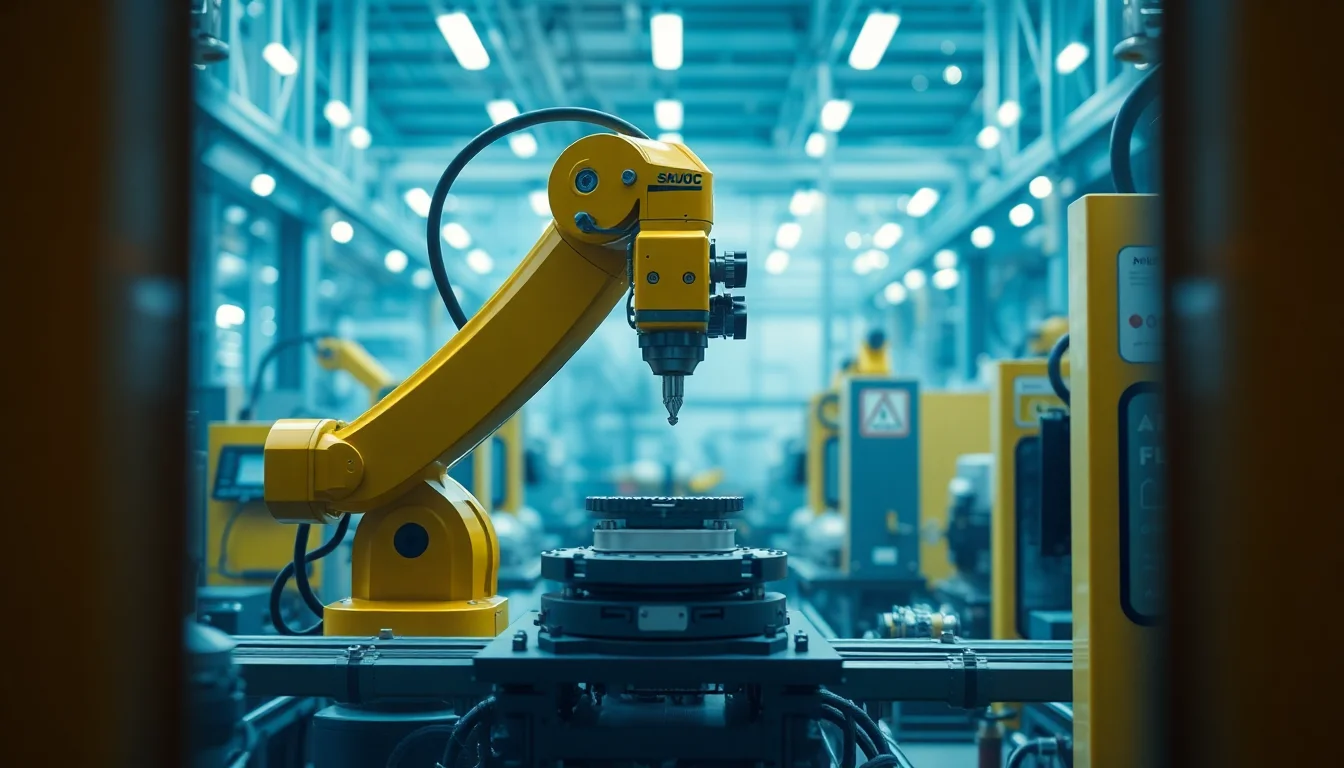
The company says it has further strengthened the integration between Nvidia Isaac Sim and Fanuc RoboGuide, building on a setup that already let engineers import robot motion simulations into Isaac Sim. The updated connection is meant to do more than produce a nicer demo. Fanuc says the two systems are now more tightly integrated, with RoboGuide and Isaac Sim communicating continuously so the virtual environment can reproduce robot trajectories and cycle times with the same control algorithms used by the actual machine.
That matters because digital twins have long promised a clean answer to a messy problem: how do you test robot programs, cell layouts, and line changes before they collide with real hardware, real takt time, and real production deadlines? In practice, many simulations still stop at a rough approximation. Fanuc’s framing suggests the goal is now more operational: real-time operation in a virtual factory, not just offline planning.
What changed: real-time digital twins in a virtual factory
The practical shift is in the integration itself. Rather than treating RoboGuide as a standalone simulation package and Isaac Sim as a separate environment, Fanuc is positioning them as a more connected workflow. One mode places Isaac Sim in front while RoboGuide runs in the background to preserve robot behavior inside the virtual space. The other mode reverses that relationship, but in both cases the point is the same: keep the simulated robot close enough to the production robot that engineers can test motion, timing, and commissioning logic with less translation loss.
For operators and integrators, this is the difference between a digital twin as a planning model and a digital twin as a working deployment tool. If the virtual cell can mirror the actual robot’s behavior closely enough, teams can validate paths, check interactions, and work through commissioning steps before the physical system is live.
Deployment reality vs. ideal: where fidelity meets factory variance
The industry likes to talk about perfect twins. Factory deployment is rarely perfect.
A simulation only pays off if the control behavior in the model stays aligned with the control behavior on the floor. That means the obvious technical pieces matter: algorithm parity, sensor modeling, and a data pipeline that does not introduce lag or drift between the virtual and physical systems. If the simulated cycle time is off, or if sensor inputs behave differently in the virtual stack than they do around a real robot, the twin starts losing value quickly.
That is the tension in Fanuc’s announcement. The tighter integration is promising because it addresses one of the biggest weaknesses in robot simulation: the handoff between design-time assumptions and production-time variability. But real factories are noisy. Workpieces vary, fixturing changes, operators intervene, and upstream processes are not always stable. The more a virtual factory is expected to mirror production, the more important it becomes to keep the model synchronized with what actually happens on the line.
In other words, the technical breakthrough is not the existence of a digital twin. It is the degree to which the twin remains trustworthy after the first few edge cases.
Operator impact: what changes for testing, commissioning, and troubleshooting
For engineers and operators, the payoff is most obvious in commissioning and troubleshooting.
A tighter RoboGuide–Isaac Sim workflow should make it easier to test robot motion, verify cycle timing, and stage cell changes without taking equipment offline as often. That can shorten the path from design to production, and it may also reduce the number of surprises once a cell goes live. When a robot path can be rehearsed in a virtual environment that behaves like the real one, teams can catch errors earlier and debug with more context.
But there is a skills shift here too. Virtual testing only works if the people running it understand both the robot and the simulation layer. Operators may need new training on how to interpret simulation results, compare them with live performance, and recognize when the model is no longer representative. Engineers, meanwhile, will need more disciplined workflows around version control, calibration, and troubleshooting across the virtual-to-real boundary.
That operator impact is easy to underestimate. A digital twin does not remove human involvement; it changes where human attention is spent. Instead of only reacting to faults on the line, teams have to manage model integrity, data sync, and debug procedures across two environments.
Commercial viability: ROI, downtime, and scale
The commercial case is straightforward in theory: less downtime during commissioning, better test coverage before deployment, and fewer production interruptions when changes are introduced.
In practice, the ROI depends on how much integration work is required up front and how consistently the system performs after deployment. Licensing costs, implementation overhead, and the effort needed to maintain high-fidelity data flows all affect whether the savings show up quickly enough to matter. A simulation stack that works well in a pilot cell but becomes expensive or brittle at scale will struggle to justify itself.
That is why the most important economic signal is not a headline efficiency claim. It is whether the system reduces commissioning time without creating a new layer of maintenance burden. If the integration is robust enough to support multiple lines, and if the virtual environment keeps matching production behavior over time, the value case becomes much stronger. If not, the twin risks becoming another tool that looks excellent in a demo and is hard to sustain in production.
What to watch next: milestones, risks, and signals
The next test is not whether the technology looks accurate in a showcase. It is whether it holds up under production pressure.
Operators and investors should watch for four signals:
- Production-rate parity on live lines: Does the virtual model continue to match actual throughput and cycle time after deployment?
- Data pipeline reliability: Are motion, sensor, and control data moving cleanly between RoboGuide and Isaac Sim without drift or latency issues?
- Operator feedback: Do engineers find the workflow easier to use for commissioning and troubleshooting, or does it add complexity?
- Scaling terms: Do licensing and integration costs stay manageable as the system moves from a single cell to broader deployment?
Fanuc and Nvidia are making a credible push to turn digital twins into a practical industrial workflow rather than an aspirational concept. The question now is not whether virtual commissioning is useful in principle. It is whether deployment reality can keep up with the promise of real-time operation in a virtual factory.