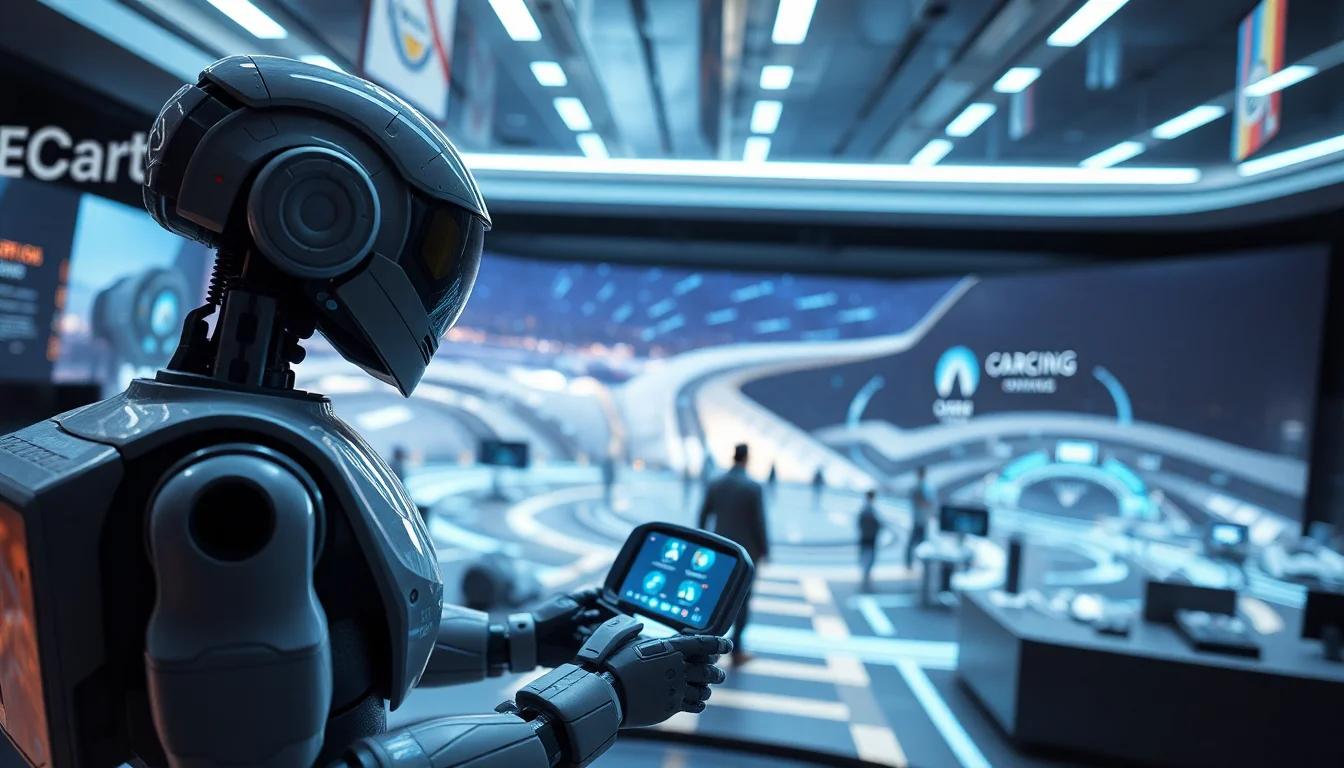
Decart’s Oasis 3 arrives with a familiar promise in physical AI: if synthetic environments can look and behave enough like the real world, robots should learn faster and fail less once they leave the lab. That is the pitch behind the new world model, which generates photorealistic, interactive video streams for training robots and autonomous vehicles.
For operators and engineers, though, the relevant question is not whether the output looks convincing on a demo screen. It is whether Oasis 3 translates into measurable deployment gains — higher transfer success, fewer edge-case failures, shorter training cycles, and a total cost structure that makes sense when the system is running at scale.
That is where the tension sits. Physical AI still runs into the same stubborn problems: weather shifts, lighting variation, sensor noise, moving people, odd object interactions, and the long tail of conditions that are hard to script in a simulator. Decart’s system is meant to address that gap by combining high-fidelity rendering with a physics engine, creating training streams that are richer than traditional synthetic data. In principle, that gives developers more varied scenarios without waiting for scarce real-world data collection.
In practice, the boundary conditions matter. A world model can only help if the behaviors it generates are stable enough to support learning, diverse enough to cover the operational envelope, and cheap enough to run often enough to matter. If the model needs heavy compute, extensive curation, or elaborate infrastructure to produce usable episodes, the economics start to look different fast — especially for teams that already spend heavily on data labeling, GPU capacity, and integration work.
That is why deployment reality should remain the lens here. A robotics program does not benefit from realism in the abstract; it benefits when a synthetic pipeline shortens iteration cycles in a way that the operations team can actually absorb. If Oasis 3 can produce scenarios that reduce the number of expensive real-world test runs, it may have value in environments where validation is slow or risky, such as autonomous navigation, warehouse robots, or mobile systems operating around people. But the system still has to prove that its gains survive contact with messy field conditions.
The operator impact could be significant, but only if the tooling is practical. New training loops usually mean new data orchestration, new prompts or scenario controls, and new interfaces between the world model and the autonomy stack. That can improve engineering throughput, but it can also add complexity for maintenance teams and program managers who need reproducible workflows. If the model’s outputs are hard to version, hard to audit, or hard to plug into existing simulation and validation pipelines, adoption slows even when the visuals are impressive.
This is where performance metrics matter more than marketing language. A credible deployment story for Oasis 3 would need to show transfer success rates on target hardware, data efficiency improvements relative to baseline simulation or real-data collection, reductions in training time, and a clear view of total compute cost per useful training hour. Without that, it is difficult to separate a compelling demo from a system that changes operational outcomes.
Validation also needs to extend beyond a narrow lab setting. Engineers will want to know how the model performs across different robot form factors, payloads, sensor stacks, and control policies. Investors will want evidence that the same pipeline can support more than one vertical without collapsing under customization costs. Operators will want to know whether the system is robust enough to handle the mundane but decisive realities of deployment: downtime, bandwidth limits, pipeline maintenance, and the effort required to keep synthetic data aligned with changing field conditions.
Commercially, Oasis 3 lands in a market that is already crowded with simulation tools, data generation platforms, and robotics training workflows. Its advantage, if it holds up, would be in accelerating iteration and improving the quality of training environments without requiring a proportional increase in real-world trials. That could matter most in high-value deployments where each test cycle is expensive, dangerous, or slow to approve.
But ROI will likely vary by use case. A warehouse robot program with tightly defined routes and controlled conditions may not need a photorealistic world model to hit its targets. An autonomous vehicle stack, a field robot, or a humanoid operating in variable human environments may have more to gain, but also more ways for the economics to break. The more complex the deployment, the more important it becomes to prove that Oasis 3 can deliver durable data pipelines and cost-to-value parity, not just cinematic realism.
For now, Oasis 3 looks less like a finished answer than a serious bet on where physical AI training is headed. The strategic idea is plausible: better synthetic worlds may help robots learn faster and generalize better. The operational test is harder. If Decart can show that the system improves measurable performance without creating an expensive new layer of infrastructure, it could become part of the standard training stack. If not, it may remain a sophisticated demo searching for a deployment model.