AI is increasingly being folded into the same process-excellence disciplines that industrial operators have trusted for years. Lean Six Sigma brought statistical rigor and defect reduction. Business process management, or BPM, gave companies a way to map work end to end and keep it accountable. The new twist is that AI is now being inserted into those frameworks to sharpen measurement, speed up analysis, and connect actions across the full workflow.
That shift matters on the shop floor, where the promise of better process performance runs into a more stubborn reality: work is physical, variable, and heavily dependent on human judgment. In theory, AI can help a plant identify bottlenecks, correlate downtime with upstream defects, and prioritize interventions. In practice, those gains only hold when the recommendations translate into routines operators can actually use, and when the underlying data is clean enough to support them.
That is where deployment reality starts to separate useful systems from impressive demos. Industrial robotics, humanoids, and autonomy stacks all depend on reliable data pipelines, stable control-system integration, and interfaces that do not interrupt production. If an AI layer cannot read from the right systems, write back into them safely, and fit into how operators already make decisions, it tends to stay a pilot. The technology may look intelligent in a lab. On the line, it still has to survive shift changes, exception handling, and the everyday messiness of factory operations.
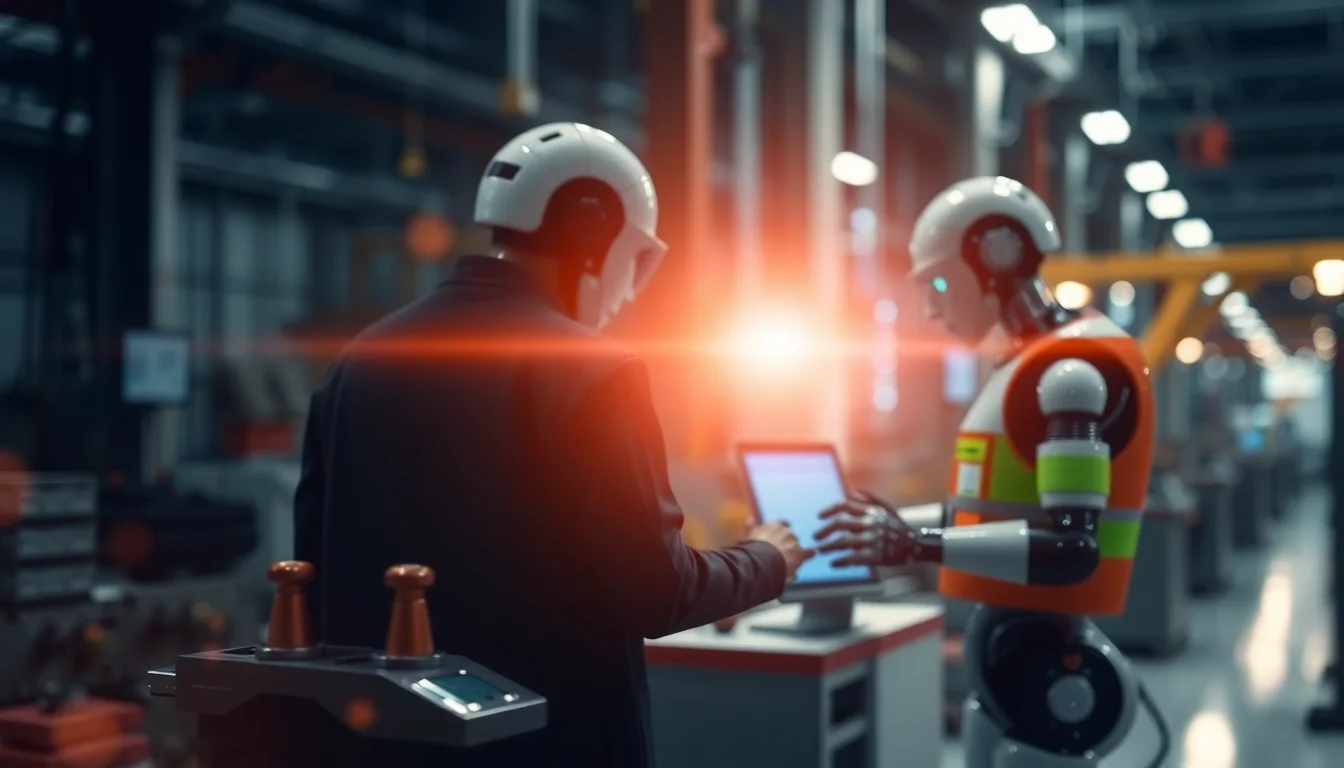
The operator impact is easy to underestimate. AI-driven process optimization often gets described as a management tool, but on the floor it changes who sees what, when they see it, and how fast they are expected to act. If a humanoid is being trialed for material handling, or an autonomy stack is coordinating mobile robots around a line, the process-excellence layer has to understand those handoffs in real time. Otherwise, the optimization logic can create new friction: alerts that are too noisy, recommendations that are too abstract, or decisions that bypass the people who actually know how the line behaves.
MIT Technology Review’s latest reporting frames this as an evolution of established operating disciplines, not a replacement for them. The report notes that organizations with strong process frameworks are best positioned to maintain operational rigor at scale, because they already know how to embed measurement, analysis, and accountability into daily work. That is a useful reminder for robotics and physical AI deployments. The winning systems will not be the ones that simply add an AI dashboard on top of a factory. They will be the ones that fit into a broader operational cadence, where process improvement is tied to execution, not just observation.
The market signal is real enough to warrant attention. The AI-powered process-optimization market could exceed $113 billion over the next decade, and the same reporting says 88% of business leaders expect to increase investment in AI-infused process intelligence within the next 12 to 18 months. But that spending does not guarantee value. It just raises the stakes for proving it.
For operators and investors, the key question is not whether AI can identify a better process path in principle. It is whether a deployment improves end-to-end performance in the conditions that matter: on the shop floor, in live production, with real constraints. A narrow pilot that improves one metric in isolation can still fail if it shifts bottlenecks elsewhere, burdens operators with extra steps, or breaks under the pressure of scale.
That is especially true in physical AI, where software recommendations intersect with actuators, sensors, and safety systems. A process model that works well in a back office may be brittle in a plant where a single missed data point can affect line balance or material flow. Humanoids and mobile robots add another layer of complexity because they extend the control problem from fixed automation into environments that change constantly. The optimization framework has to be aware of those dynamics, not just the dashboard that reports them.
A practical deployment playbook starts with cross-functional KPIs. Do not measure only algorithmic accuracy or task completion rates. Tie the pilot to throughput, downtime, exception handling, operator intervention time, and rework. If the system is supposed to support Lean Six Sigma or BPM, it should make those frameworks more actionable, not more abstract.
Next, validate data lineage before scaling anything. AI process optimization depends on the quality of the streams feeding it: machine telemetry, quality checks, MES data, maintenance logs, and operator input. If those sources do not line up, the model may optimize around a false picture of the line. In robotics environments, that problem compounds quickly because autonomy stacks and industrial robots often generate separate data silos that are not aligned to the same process map.
Then integrate with the operational stack, not around it. That means connecting to the control systems, workflow tools, and human-machine interfaces that operators already use. A deployment that requires a second screen no one trusts, or a manual workaround outside the production system, is not ready for scale. The process layer should reduce cognitive load on operators, not add another layer of interpretation.
Finally, make human-in-the-loop governance explicit. In a shop floor environment, AI should support decisions that operators and supervisors can review, override, and learn from. That is particularly important where physical AI systems interact with safety-critical steps or where a humanoid or autonomous robot is acting in close proximity to people. Governance is not just a compliance issue; it is what keeps the system from drifting away from operational reality.
The broader pattern is straightforward. AI is moving process-excellence methods from retrospective analysis toward real-time execution. That is a meaningful change for manufacturing, logistics, and other industrial settings where robotics and physical AI are becoming more common. But the deployments that endure will likely be the ones that respect the old rules: measure carefully, integrate deeply, and keep the operators close to the loop.