AI, robotics and automated mining: what’s actually running in the field
The big shift in mining is not that autonomy exists; it is that autonomy is now expected to hold up in production. Intelligent excavators and driverless haul trucks are no longer confined to lab demos or one-off pilots. Major equipment makers including Caterpillar, Komatsu, Hitachi, and Terex have put AI control modules and robotic operating systems onto flagship machines that work in harsh, around-the-clock mine environments.
That matters because the operational question has changed. Mines are no longer asking whether autonomous equipment can move rock. They are asking whether it can keep moving through a maintenance cycle, survive parts delays, and fit into the workflows of operators, dispatchers, and maintenance teams without creating a new layer of fragility.
The autonomy that is actually operational today
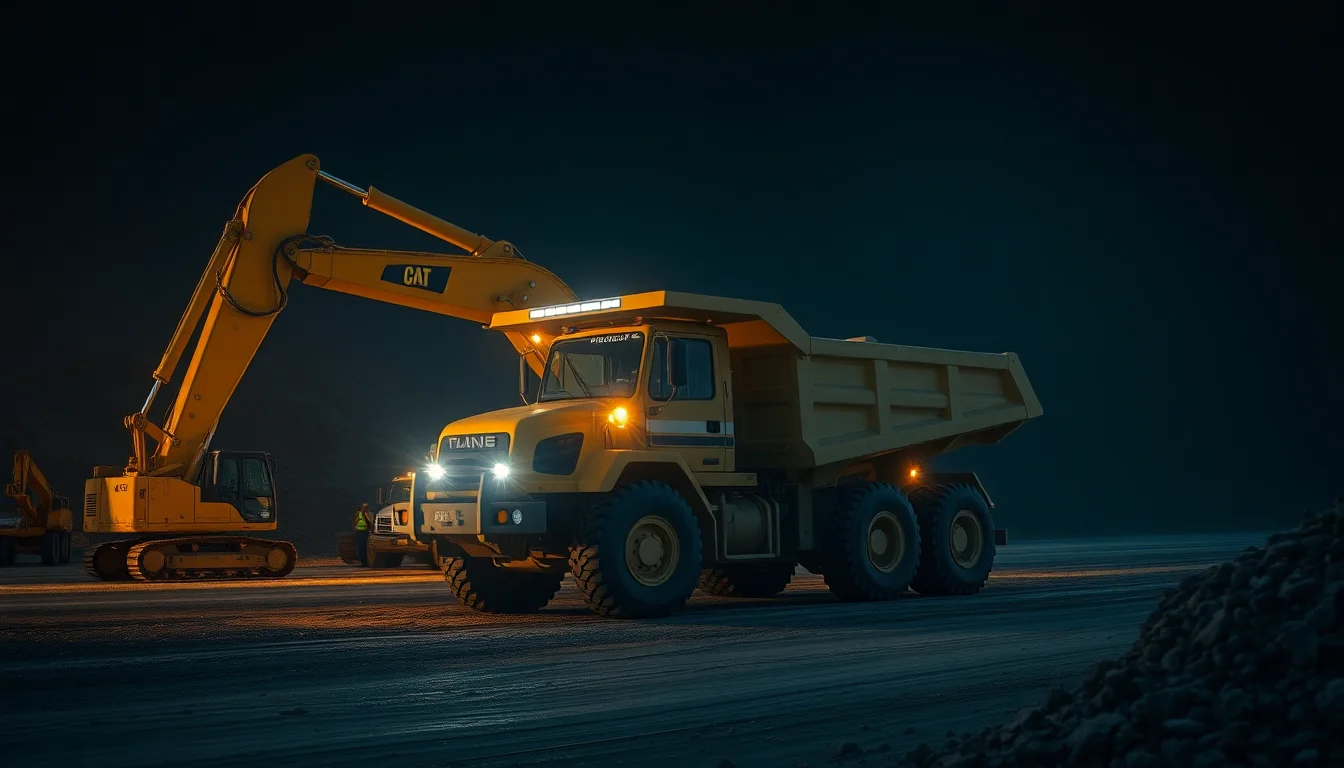
The most visible AI deployments in mining are in truck fleets and large excavators. In the reporting on current automated mining systems, models such as Caterpillar’s 773, 777, and 793 series haul trucks, Komatsu’s HD785, 930E, PC1250, and PC2000 platforms, Hitachi’s EX and ZX large excavators, and Terex’s TR50, TR100, and MT4400 haulage trucks are described as having mature intelligence and automation features already embedded in production hardware.
That is a meaningful threshold. It suggests the industry has moved beyond experimental autonomy into equipment that can be purchased, integrated, and run as part of a mine’s operating plan. But production does not mean hands-off. These systems still depend on human oversight, particularly when conditions change, faults appear, or the machine has to be coordinated with conventional fleets and fixed infrastructure.
In practice, the autonomy that matters most is not a fully driverless mine. It is a mine where machines can handle repetitive, high-exposure tasks consistently while people supervise exceptions, manage maintenance, and keep the system aligned with production targets.
Maturity is showing up in safety and productivity, not just in marketing
The case for AI-enabled mining gear is strongest where it improves safety and repeatability. Removing operators from the most hazardous parts of the cycle, or reducing the amount of manual intervention needed in haulage and excavation, can cut exposure in environments where fatigue, dust, vibration, and visibility are persistent constraints.
Productivity gains also come from consistency. Automated systems can run through long shifts with less variation than human-only operation, provided the support stack is in place. That support stack includes not just the machine’s onboard AI, but the control software, communications layer, dispatch integration, and maintenance planning around it.
This is where the curve is separating. The flagship equipment is mature enough to be deployed at scale, but the performance difference between a successful deployment and a disappointing one often has less to do with the autonomy package than with the mine’s own readiness to absorb it.
Uptime depends on the maintenance backbone
In mining, the hidden variable is uptime. A truck that can drive itself is only valuable if it can keep driving. And keeping it running depends on far more than the autonomy stack.
The reporting on automated mining equipment points to a basic operational truth: reliable spare parts are a foundation, not an accessory. If a mine cannot get replacement components quickly, or if service teams cannot diagnose failures in the field, then whatever productivity the autonomous system created at the front end gets handed back to downtime.
This is why maintenance cycles and parts logistics matter so much. Autonomous fleets tend to raise the stakes on predictability. Mines need a clearer sense of mean time between failures, stronger field-service coverage, and tighter alignment between OEM support and site-level maintenance routines. When that alignment is weak, the gains from automation can evaporate into waiting time, cannibalized inventory, and delayed return-to-service.
For operators, this changes procurement logic. The question is not simply whether the machine is advanced. It is whether the supplier can support the machine with a spare-parts ecosystem that matches the intensity of mine operations.
The operator’s role does not disappear; it shifts
One of the more important deployment realities is that autonomy changes work rather than eliminating it. Repetitive tasks may fall, but monitoring, fault diagnosis, systems supervision, and maintenance coordination rise.
That creates a different operator profile. Instead of sitting in the cab full time, people are increasingly embedded in control rooms, diagnostics teams, and maintenance planning functions. They need training not only on machine handling, but on how to interpret alerts, manage exceptions, and keep autonomous systems interoperable with older equipment and site software.
This is where workflow integration becomes decisive. The mines that benefit most are not necessarily those with the newest hardware, but those that have a clean operational handoff between autonomy, supervision, and repair. If the control room cannot see what the machine is doing, or if maintenance teams cannot act quickly on fault data, the system becomes more complicated without becoming more productive.
The business case depends on uptime, not autonomy as a slogan
For investors, the temptation is to treat autonomy as a proxy for margin expansion. That is too simple. In mining, commercial value is built on uptime, maintenance cost control, and interoperability with existing systems.
A fleet that is technically autonomous but spends too much time waiting on parts, calibration, or manual intervention will not deliver the operational leverage the market expects. By contrast, a more modest automation layer that is reliable, serviceable, and easy to integrate can produce a better economic outcome.
That means deployment reality should sit at the center of any diligence process. Ask how often the system is down, how quickly components can be replaced, how support is delivered in the field, and how much of the operator workflow has actually been absorbed by the new system versus simply added on top of the old one.
The emerging pattern in automated mining is clear: the winners are not the fleets that look most futuristic, but the ones that stay productive in a difficult operating environment. In mining, autonomy is now real. The hard part is making it durable.